
Managing vendors in a strata environment involves juggling multiple challenges—from ensuring timely maintenance and meeting safety standards to managing costs and vendor reliability. Strata managers often face pressure to deliver efficient services while balancing tenant expectations and compliance requirements.
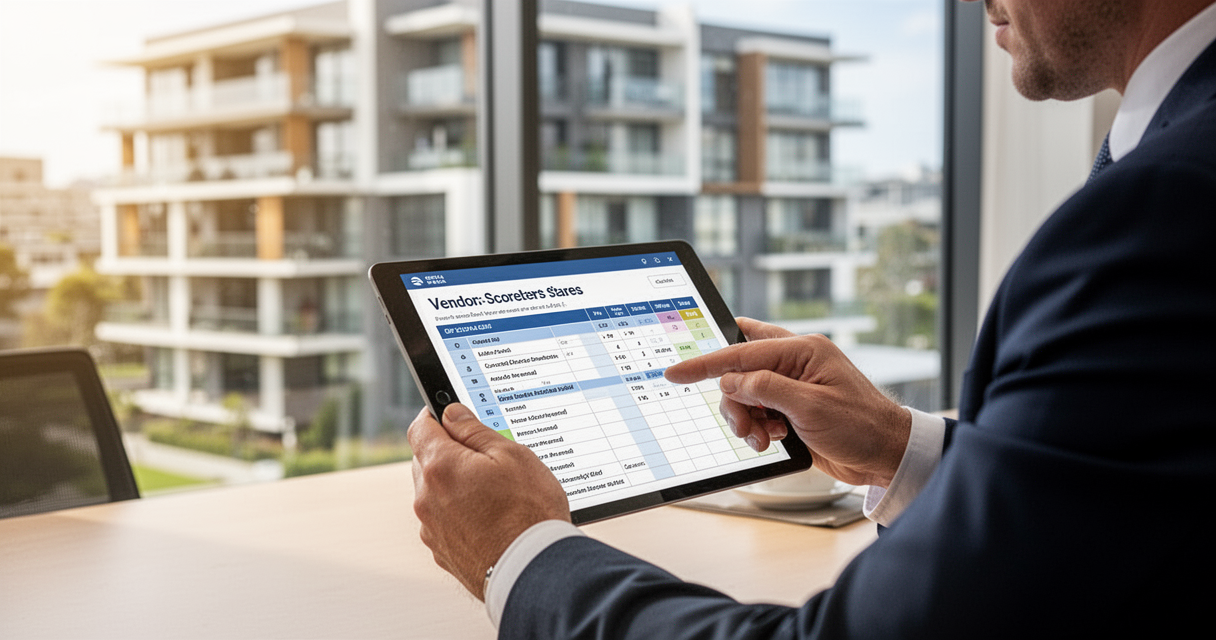
One of the most effective tools to maintain high service standards and vendor accountability is the use of vendor scorecards. These scorecards offer a structured way to evaluate vendor performance using clear criteria such as quality, service level agreements (SLA), cost, and safety.
In this article, strata managers will learn how to build and use vendor scorecards to improve vendor management and simplify decision-making. We’ll also touch on relevant aspects of vendor meetings and considerations inspired by event planners for broad applicability.
1. Understanding Vendor Scorecards: What They Are and Why They Matter
Vendor scorecards are performance measurement tools that help strata managers assess the effectiveness and efficiency of their vendors. They turn subjective opinions into objective data, supporting better vendor decisions.
Scorecards typically include key metrics that reflect the priorities of strata properties, such as work quality, responsiveness against contracted SLAs, cost-effectiveness, and adherence to safety standards. This structure ensures vendors meet expectations and encourages continuous improvement.
By using vendor scorecards, strata managers reduce risks related to poor workmanship, delays, compliance failures, and unexpected costs.
- Provide clear, objective vendor performance feedback
- Improve accountability across multiple vendors
- Highlight strengths and areas needing improvement
- Enable data-driven procurement and renewal decisions
2. How to Measure Quality in Vendor Services
Quality is the cornerstone of vendor evaluation. For strata properties, this means assessing the workmanship, durability of materials, and the finish of maintenance or repair work.
To measure quality effectively, set clear benchmarks based on industry standards and past performance. Incorporate regular inspections and tenant feedback into your scorecard to gain a holistic view of quality.
Quality scores can also be linked to return visits or repeat maintenance requests—lower repeat calls usually indicate higher quality.
- Set quality standards aligned with strata codes and regulations
- Use tenant satisfaction surveys and direct feedback
- Track repair rework or callbacks within a specific timeframe
- Conduct periodic third-party inspections for impartial assessments
3. Evaluating Service Level Agreements (SLA) Compliance
Service Level Agreements outline the vendor’s commitments regarding response times, completion deadlines, and communication protocols. Evaluating SLA compliance ensures vendors are reliable and meet contractual obligations.
A vendor scorecard should track how consistently these SLA targets are met, documenting missed deadlines or delayed communications.
It’s essential to review SLA metrics regularly in vendor meetings to foster transparency and promptly address performance gaps.
- Measure on-time response to maintenance requests
- Track completion dates against agreed timelines
- Evaluate communication professionalism and frequency
- Review SLA adherence during periodic vendor reviews
4. Controlling Costs Without Sacrificing Quality
Cost management is critical; however, the lowest price doesn’t always mean best value. Strata managers must balance cost with quality and timeliness to avoid expensive reworks or safety issues.
Vendor scorecards can incorporate cost-related metrics such as pricing transparency, invoice accuracy, and cost competitiveness relative to market rates.
Analyzing cost alongside other criteria helps identify vendors who deliver the best overall value rather than just the lowest bids.
- Track invoice accuracy and avoid hidden charges
- Compare vendor costs to average market pricing periodically
- Evaluate cost-effectiveness in light of quality and service levels
- Consider long-term value over short-term savings
5. Ensuring Safety Compliance and Risk Management
Safety is non-negotiable in strata vendor management. Vendors must comply with occupational health and safety (OHS) requirements, including proper training, use of protective equipment, and safe work practices.
Develop safety-related KPI’s on your scorecard to measure adherence, incident reporting, and corrective actions taken.
Regular safety audits and documentation reviews should complement your vendor scorecard observations to maintain a safe environment for residents and workers alike.
- Require evidence of safety certifications and licenses
- Track incidents and near misses during vendor work
- Include safety audit results in vendor reviews
- Ensure vendors participate in strata-specific safety briefings
6. Practical Tips for Vendor Meetings and Continuous Improvement
Meeting regularly with vendors to review scorecards promotes accountability and collaboration. These meetings are opportunities to address challenges, share feedback, and discuss how to attract vendors to your event or project effectively.
Use meeting agendas to cover scorecard results, upcoming work, and any concerns or innovations. Emphasize transparency and fairness to build strong vendor relationships.
Related strategies from event planners—such as maintaining a comprehensive event planner vendor list or understanding types of event vendors—can inspire creative approaches to vendor engagement in strata settings.
- Schedule quarterly vendor performance reviews
- Share scorecard results and invite vendor feedback
- Set joint goals for improvement and monitor progress
- Discuss how digital tools like salesforce event management systems streamline vendor coordination
Frequently Asked Questions
A vendor scorecard is a tool used to evaluate vendor performance objectively across criteria like quality, SLA compliance, cost, and safety. It helps strata managers ensure vendors meet standards and improve service delivery.
Measure quality by setting standards, capturing tenant feedback, tracking repeat service calls, and conducting inspections to ensure work meets expectations.
Track metrics such as response times, completion deadlines, communication frequency, and how often vendors meet their contractual obligations.
Yes, they help analyze invoice accuracy, market pricing comparisons, and balance cost against quality and timeliness to ensure value for money.
Include safety KPIs in scorecards, require documentation of certifications, monitor incidents, and conduct regular safety audits.
Quarterly meetings are recommended to review scorecards, discuss issues and improvements, and strengthen vendor relationships.
Yes, approaches like maintaining a detailed vendor list, understanding different vendor types, and using digital management tools can enhance vendor coordination.