
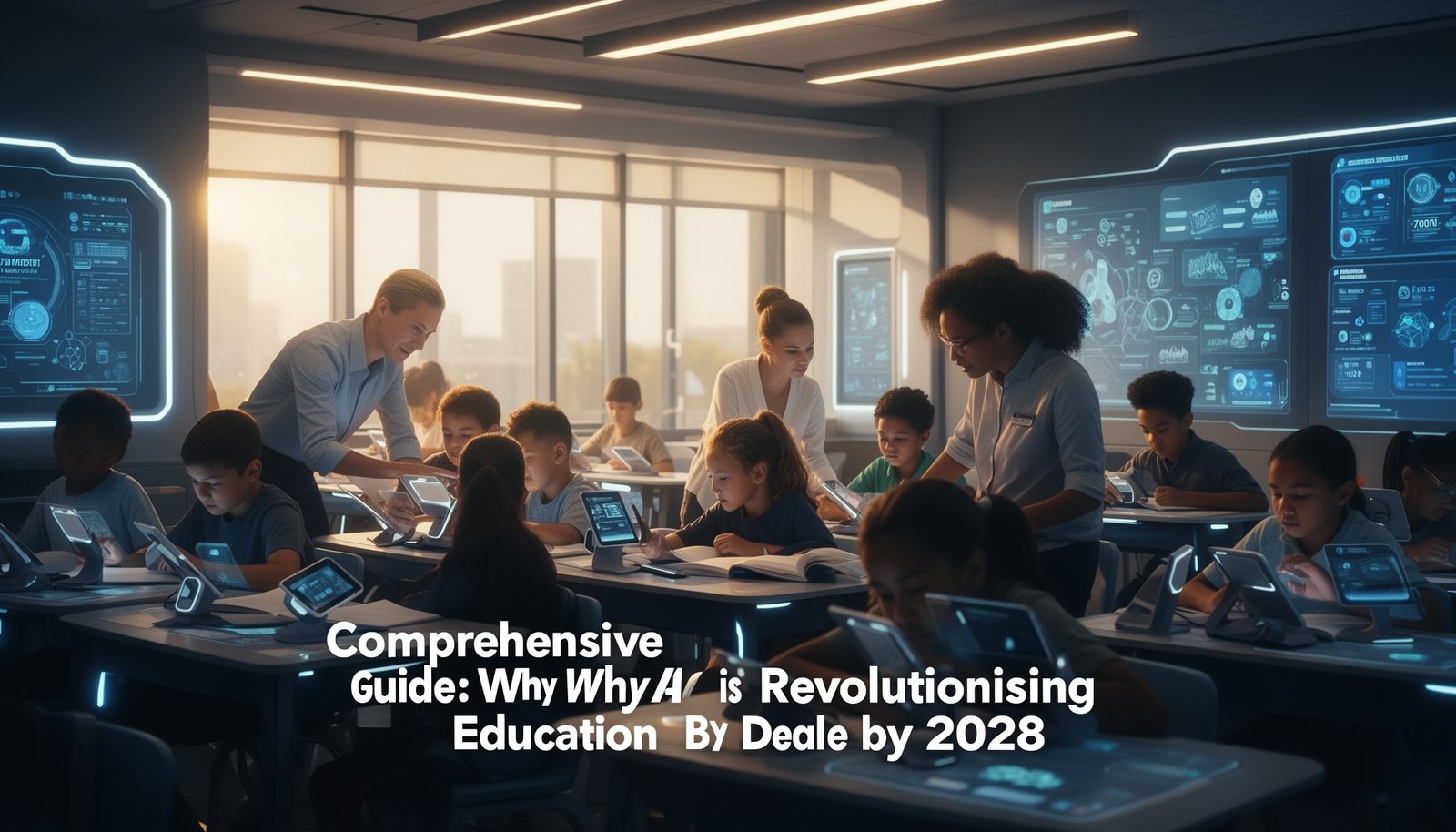
In this comprehensive guide, we delve into why AI is revolutionising education by 2028. As technology continues to advance, the education sector is undergoing a transformative shift. Artificial Intelligence (AI) is not just an additional tool but a fundamental change agent that redefines how we approach learning and teaching.
The Rise of AI in Education
Artificial Intelligence is increasingly becoming an integral part of the educational landscape. By 2028, AI is expected to be ubiquitous in classrooms, offering personalised learning experiences and efficient administrative solutions. AI’s ability to analyse vast amounts of data allows educators to tailor learning experiences to individual student needs, thereby enhancing engagement and effectiveness.
Moreover, AI-driven platforms can automate routine tasks such as grading and attendance tracking, freeing up educators to focus on teaching itself. This shift not only improves efficiency but also enhances the quality of education delivered.
Personalised Learning: The New Standard
One of the most significant impacts of AI in education is its ability to facilitate personalised learning. AI systems can adapt to the learning pace and style of each student, providing customised educational resources and feedback. This level of personalisation is unprecedented and is poised to become the new standard in education.
AI tools can identify a student’s strengths and weaknesses, offering tailored challenges and support. This approach not only boosts learning outcomes but also fosters a more inclusive educational environment where every student can thrive.
AI-Driven Teaching Methods
AI is transforming teaching methods, enabling educators to deliver content in more engaging and innovative ways. Virtual tutors and intelligent teaching assistants are becoming common, providing students with immediate feedback and support. This allows for a more interactive learning experience, which is crucial for maintaining student interest and motivation.
Additionally, AI can help educators develop more effective lesson plans by analysing student performance data to identify areas needing improvement. This data-driven approach ensures that teaching methods are continuously refined and improved.
Overcoming Challenges with AI Integration
While AI offers numerous benefits, integrating it into the educational system poses certain challenges. Issues such as data privacy, the digital divide, and the need for teacher training must be addressed to ensure successful implementation.
Educational institutions need to invest in infrastructure and training to harness AI effectively. Moreover, policies must be developed to protect student data and ensure ethical use of AI technologies.
Looking Ahead: The Future of AI in Education
As we look towards 2028, the role of AI in education is set to expand even further. We anticipate advancements in AI technologies that will offer even more sophisticated educational tools and resources. These developments will continue to transform the educational landscape, making learning more accessible, efficient, and tailored to individual needs.
The future of education with AI is promising, but it requires careful planning and consideration to maximise its potential benefits while mitigating associated risks. Educational leaders must stay informed about AI trends and developments to guide their institutions effectively.
Frequently Asked Questions
AI personalises education by adapting learning materials to fit each student’s pace and learning style, providing customised resources and feedback.
Challenges include data privacy concerns, the digital divide, and the need for comprehensive teacher training to effectively use AI tools.
By 2028, AI is expected to play a central role in personalising learning, enhancing teaching methods, and streamlining administrative tasks in education.
AI improves teaching by providing data-driven insights to develop effective lesson plans and offering tools like virtual tutors for interactive learning.
AI is considered revolutionary because it fundamentally changes how education is delivered, making it more personalised, efficient, and engaging.