
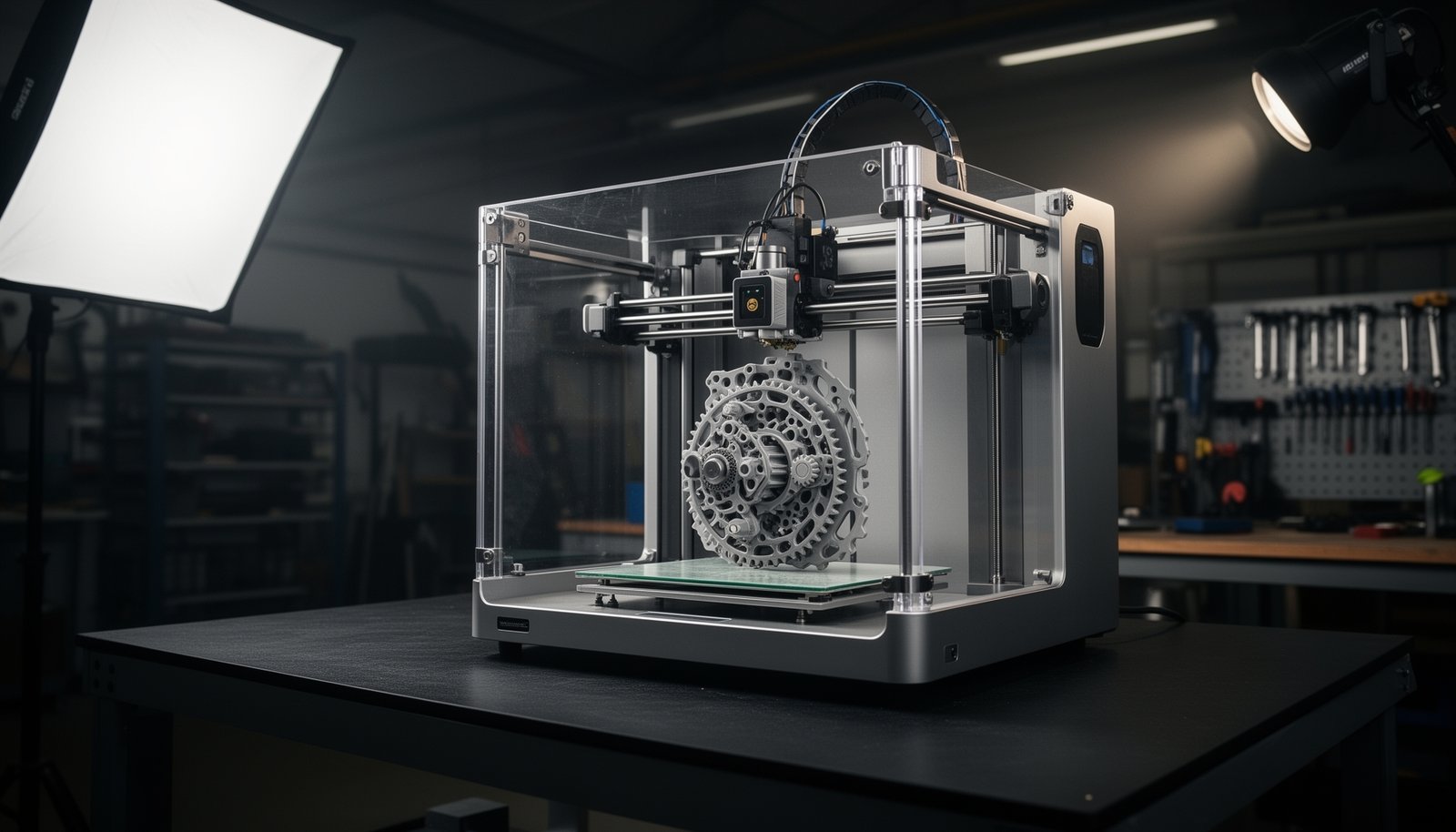
How 3D printing connect ideas with world solutions is a fascinating journey through innovation and creativity. As industries evolve, the demand for rapid prototyping, customisation, and sustainability increases. 3D printing stands at the forefront, revolutionizing the manufacturing landscape by transforming abstract concepts into tangible realities. Let’s explore how this technology bridges the gap between imagination and implementation.
The Evolution of 3D Printing
3D printing, also known as additive manufacturing, has undergone significant evolution since its inception. Initially developed for prototyping, it has expanded into various sectors, including healthcare, aerospace, and automotive industries. This technology allows for the creation of complex geometries that traditional manufacturing methods cannot achieve.
In healthcare, for instance, 3D printing is used to produce custom prosthetics and implants, greatly improving patient outcomes. In the aerospace sector, it enables the production of lightweight components that enhance fuel efficiency. These applications highlight how 3D printing not only fosters innovation but also addresses specific industry challenges.
Connecting Ideas to Real-World Solutions
The core strength of 3D printing lies in its ability to connect ideas with real-world solutions. By enabling rapid prototyping, it allows designers and engineers to quickly test and refine their concepts. This capability significantly shortens the product development cycle and reduces costs.
Moreover, 3D printing supports mass customization, catering to specific consumer needs without the need for extensive tooling. This flexibility is particularly beneficial in industries such as fashion and consumer electronics, where personalization is a key market driver.
Additionally, 3D printing contributes to sustainable manufacturing practices. By reducing material waste and energy consumption, it supports eco-friendly production processes. This is crucial in today’s climate, where sustainability is a priority for consumers and corporations alike.
The Global Impact of 3D Printing
On a global scale, 3D printing is playing a pivotal role in solving complex challenges. It is being used to produce affordable housing solutions in developing regions, where traditional construction methods are either too costly or impractical. By printing building components on-site, construction costs and time are significantly reduced.
Furthermore, in the medical field, 3D printing has been instrumental in the fight against COVID-19. During the pandemic, 3D printers were used to produce personal protective equipment (PPE) and ventilator parts, showcasing the technology’s adaptability and responsiveness to urgent needs.
The innovation driven by 3D printing is not limited to any one sector or region. Its applications are as diverse as the challenges it addresses, making it a vital tool in the global effort to connect ideas with solutions.
Future Prospects of 3D Printing
Looking ahead, the future of 3D printing is bright and full of potential. As technology advances, we can expect even greater integration into traditional manufacturing processes. The continued development of new materials and techniques will further expand its applications and efficiency.
Researchers are exploring the use of 3D printing in bioprinting, which could revolutionize organ transplants by creating tissues that are compatible with human bodies. In the space industry, 3D printing is poised to facilitate off-world manufacturing, a critical step for long-term space exploration.
In conclusion, 3D printing is not just a manufacturing tool but a catalyst for innovation and problem-solving worldwide. Its ability to transform ideas into practical solutions is unmatched, and its future prospects are bound to reshape industries and societies at large.
How 3D Printing Connect Ideas with World Solutions
To truly understand how 3D printing connects ideas with world solutions, one must look at its ability to democratize innovation. By lowering the barriers to entry, it empowers individuals and small businesses to compete with larger corporations. This democratization fosters a dynamic market where creativity and innovation thrive.
For example, start-ups can leverage 3D printing to develop prototypes without the need for large-scale investment in machinery. This accessibility accelerates the innovation process and allows for quick pivots based on market feedback.
Ultimately, 3D printing acts as a bridge between imagination and reality, enabling the creation of products that were once thought impossible. It embodies the spirit of innovation, making it an indispensable tool in the quest for global solutions.
Frequently Asked Questions
Industries such as healthcare, aerospace, automotive, and consumer electronics benefit significantly from 3D printing due to its ability to produce custom, lightweight, and complex components.
3D printing contributes to sustainability by minimizing material waste, reducing energy consumption, and enabling eco-friendly production processes.
Yes, 3D printing is used in construction to produce affordable housing, reducing costs and time by printing building components on-site.
Future applications include bioprinting for organ transplants, off-world manufacturing for space exploration, and further integration into traditional manufacturing processes.
By enabling rapid prototyping and mass customization, 3D printing lowers the barriers to entry for innovation, allowing small businesses and individuals to compete with larger firms.