
Key Takeaways
- •Deforestation and pollution significantly reduce Earth’s oxygen levels.
- •Ocean deoxygenation is a critical factor in declining oxygen levels.
- •Australia’s conservation efforts are essential in addressing oxygen depletion.
Key Answer
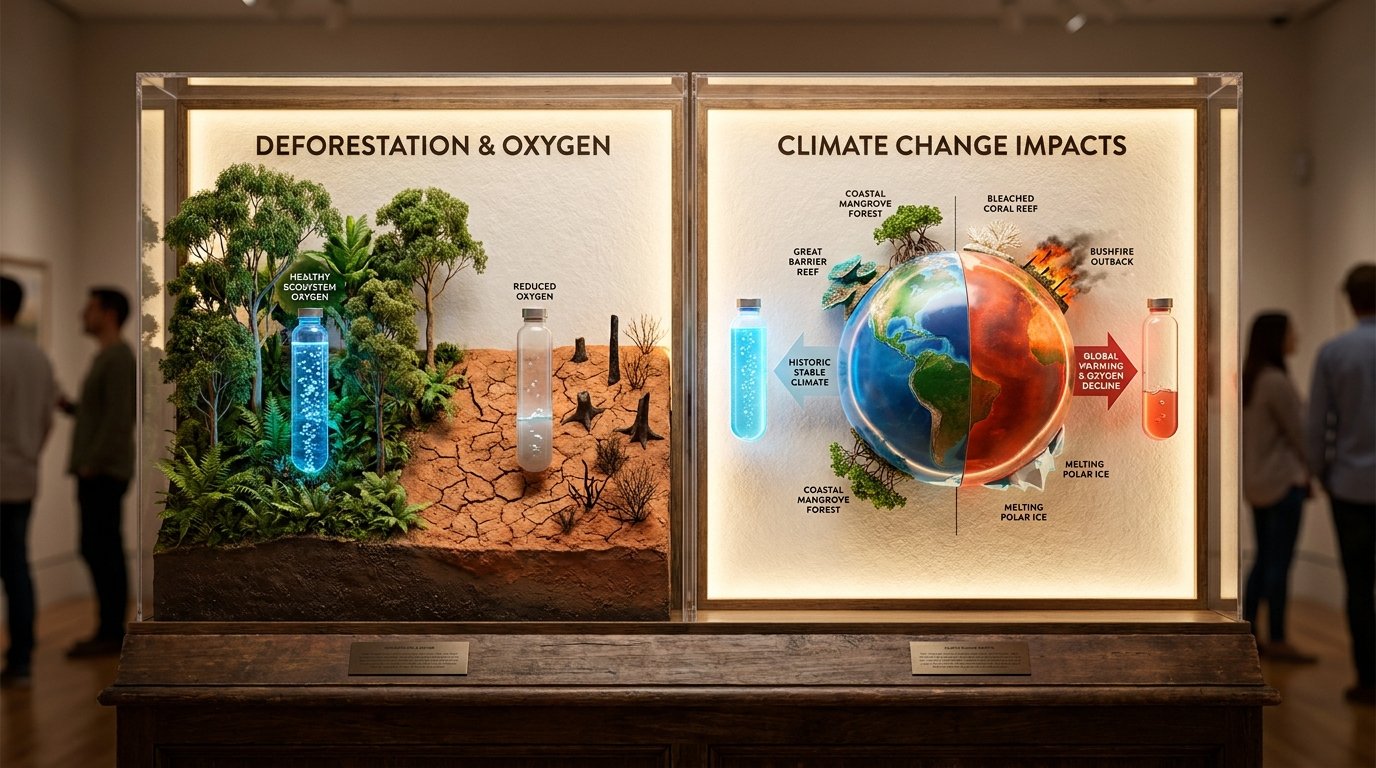
Earth’s oxygen levels are diminishing due to deforestation, pollution, and climate change, impacting the planet’s delicate oxygen balance. Australian scientists highlight local conservation efforts as key to addressing these challenges.
Why Earth’s oxygen levels are diminishing is an urgent environmental question with profound implications for our planet’s future. Understanding the dynamics at play is crucial, particularly in Australia, where unique ecosystems are both vulnerable to and crucial for global oxygen cycles. This article delves into the scientific reasons behind this decline, examining the impacts of deforestation, pollution, and climate change, supported by insights from leading Australian environmental scientists and case studies from local conservation efforts.
The Science Behind Oxygen Reduction
Earth’s oxygen levels are primarily influenced by two critical natural processes: photosynthesis and respiration. The balance between these processes maintains our atmosphere’s oxygen levels. However, human activities such as deforestation and industrialization have disrupted this balance. According to the Australian National University, deforestation in particular reduces the number of trees available to produce oxygen, exacerbating the problem.
Moreover, pollution contributes significantly by increasing the presence of carbon-based emissions, which chemically interact with oxygen molecules, reducing the overall availability of breathable air. Recent studies show that increased carbon emissions correlate with a measurable decline in atmospheric oxygen levels, a concern emphasized by experts from the University of Sydney.
Ocean Deoxygenation: A Silent Threat
A lesser-known but critical aspect is ocean deoxygenation. The oceans are significant producers of oxygen due to the vast number of phytoplankton that undergo photosynthesis. However, as global temperatures rise, the solubility of oxygen in ocean water decreases. This phenomenon, combined with acidification and pollution, leads to decreased oxygen levels in our oceans.
Dr. Emily Chen, a marine biologist at the University of Western Australia, explains that ‘the decrease in oceanic oxygen levels not only affects marine life but also reduces the ocean’s capacity to support oxygen-producing phytoplankton, leading to a vicious cycle.’ This cycle is particularly concerning in the Great Barrier Reef, where warming waters have led to coral bleaching and decreased biodiversity.
Expert Perspective
Environmental Science Expert
In addressing why Earth’s oxygen levels are diminishing, Australian scientists emphasize the importance of understanding both terrestrial and marine ecosystems. Our unique biodiversity plays a crucial role in sustaining global oxygen levels, and its preservation should be a priority.
Deforestation and Its Impact
Deforestation remains a leading factor in the declining oxygen levels globally. Australia’s unique flora, including vast eucalyptus forests, plays a pivotal role in global oxygen production. When these forests are cleared for agriculture or urban development, the photosynthetic capacity of these regions diminishes. According to the World Wildlife Fund, nearly 395,000 hectares of forest were cleared in Queensland alone in 2018-19, demonstrating the scale of this issue.
Experts like Dr. Michael Thompson from the Australian Forest Research Council warn that ‘if current deforestation rates continue, we will see an accelerated decline in global oxygen levels, with severe consequences for biodiversity and climate.’ Effective reforestation efforts, especially those that involve native species, are crucial in mitigating this impact.
The Gondwana Link Project
The Challenge
A significant environmental project in Western Australia aimed at reconnecting fragmented ecosystems to boost oxygen production.
The Result
The project has enhanced regional biodiversity and improved the capacity for carbon capture, serving as a model for similar initiatives worldwide.
Climate Change: A Catalyst for Decline
Climate change intensifies all contributing factors to oxygen depletion. Rising temperatures enhance the rate of oxygen consumption by organisms while decreasing the solubility of oxygen in water bodies. Climate change also leads to more frequent and severe wildfires, which not only destroy oxygen-producing vegetation but also release large amounts of CO2 into the atmosphere.
A collaborative study by the Bureau of Meteorology and CSIRO highlights that Australia’s rising temperatures and changing climate patterns have dire consequences for both terrestrial and marine oxygen cycles. The reduction in oxygen levels exacerbates existing environmental stresses, threatening ecosystems and biodiversity.
Local Conservation Efforts in Australia
In response to these challenges, Australia has pioneered several conservation projects aimed at restoring oxygen balance. Projects such as the Gondwana Link in Western Australia aim to reconnect fragmented ecosystems, enhancing both carbon capture and oxygen production. The success of these projects highlights the importance of coordinated conservation strategies.
Dr. Sarah Connors, a conservation ecologist, argues that ‘local action is crucial to counteract global trends. By restoring native vegetation and protecting existing forests, Australia can play a significant role in mitigating oxygen depletion.’ These efforts not only preserve biodiversity but also ensure the sustainability of oxygen production for future generations.
Frequently Asked Questions
Deforestation reduces the number of trees that produce oxygen through photosynthesis, leading to diminished atmospheric oxygen levels.
Ocean deoxygenation refers to the reduction of oxygen levels in ocean waters, primarily caused by rising global temperatures, pollution, and acidification.
Australia’s diverse ecosystems, including vast forests and marine environments, significantly contribute to global oxygen production through photosynthesis.
Projects like the Gondwana Link aim to reconnect fragmented ecosystems, boosting both oxygen production and carbon capture.
Climate change raises temperatures, enhancing oxygen consumption and reducing solubility in water bodies, thereby lowering available oxygen levels.