


Share this article

Table of Contents

Why Mental Health Matters in Everyday Life: An Australian Perspective

Table of Contents

Why Mental Health Matters in Everyday Life: An Australian Perspective

Key Takeaways

  • Mental health significantly affects both personal and professional aspects of life.

  • In Australia, mental health is closely tied to economic productivity and workplace culture.

  • Digital stressors are a modern challenge to mental health, requiring proactive management.

  • Building emotional resilience is key to maintaining healthy relationships.

Key Answer

Understanding why mental health matters in everyday life is key to unlocking personal and professional potential. In Australia, mental wellbeing directly influences productivity and happiness.

Why mental health matters in everyday life is a question that resonates deeply with many Australians. In our fast-paced world, mental health is as pivotal as physical health, playing a crucial role in how we think, feel, and act daily. From boosting workplace performance to enhancing personal relationships, maintaining mental wellbeing is essential for a fulfilling life.
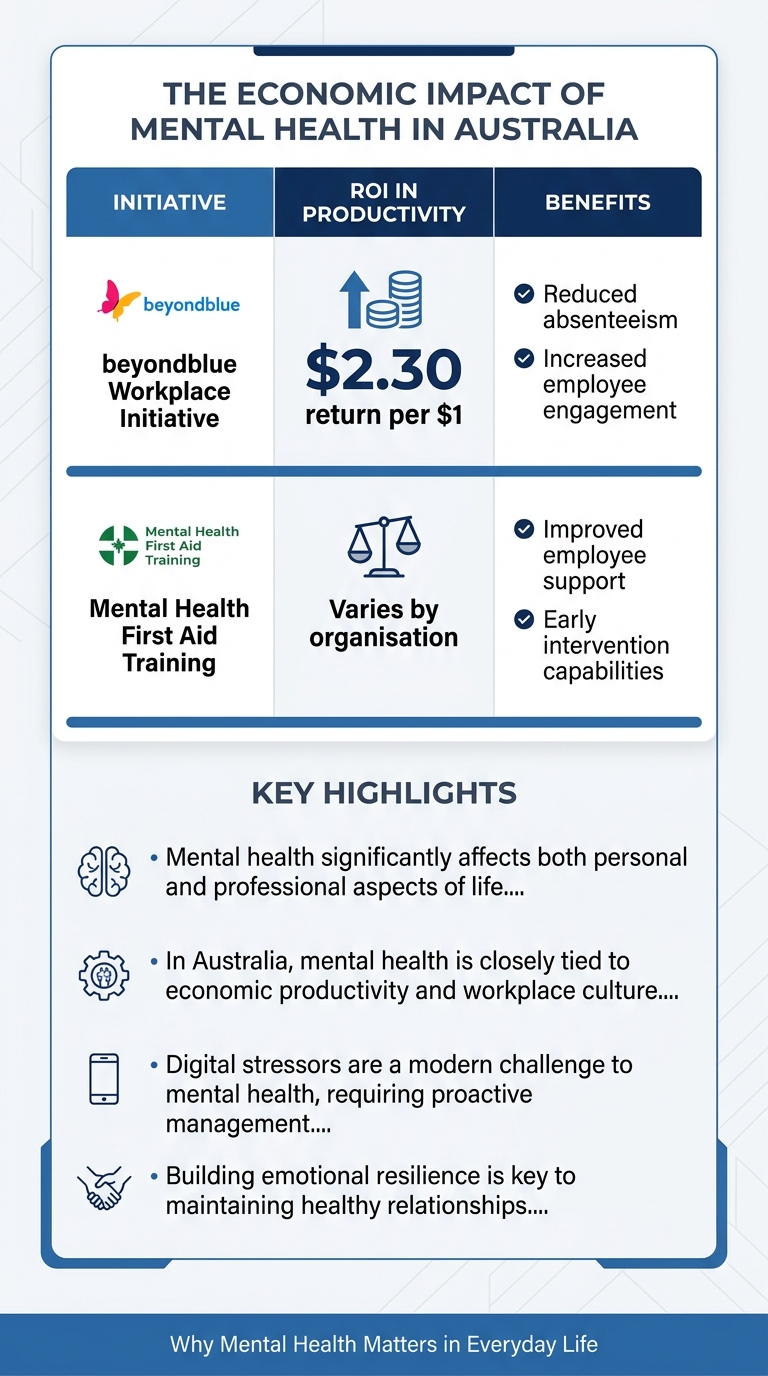
The Economic Impact of Mental Health in Australia

Mental health issues are not just a personal concern–they have wide-reaching economic implications. In Australia, mental health disorders such as anxiety and depression are leading causes of disability, costing the economy billions of dollars each year. According to the Australian Bureau of Statistics, mental health conditions affect one in five Australians, highlighting a significant impact on productivity and workplace performance.

Employers are increasingly recognising that fostering a supportive mental health culture is not only ethical but also economically beneficial. Australian companies are implementing mental health programs to reduce stress and absenteeism. For instance, beyondblue’s workplace mental health initiative has shown that every dollar spent on mental health results in a $2.30 return in productivity gains.

Initiative

ROI in Productivity

Benefits

beyondblue Workplace Initiative

$2.30 return per $1

Reduced absenteeism, increased employee engagement

Mental Health First Aid Training

Varies by organisation

Improved employee support, early intervention capabilities

Physical and Mental Health: A Symbiotic Relationship

The connection between physical and mental health is undeniable. Poor mental health can lead to a variety of physical health issues, such as heart disease and weakened immune response. Conversely, maintaining physical health through regular exercise and a balanced diet can significantly improve mental wellbeing.

In Australia, initiatives promoting the gut-brain connection, like those by the Black Dog Institute, emphasize the role of nutrition in mental health. These programs encourage Australians to consider their diet and physical activity levels as integral components of their mental health management.

Modern Stressors: Navigating the Digital Age

The digital age brings unique stressors that impact mental health. From social media pressures to the constant connectivity of smartphones, Australians face unprecedented levels of digital fatigue. Research from the University of Sydney highlights how excessive screen time correlates with increased anxiety and depression among young Australians.

Adopting a ‘digital detox’ can be a practical strategy to manage these stressors. Setting boundaries on screen time and prioritising offline activities can alleviate digital fatigue and enhance mental health. Encouragingly, local campaigns like ‘Tech-Free Sundays’ promote family time without digital distractions, helping to foster healthier habits.

Building Emotional Resilience in Relationships

Emotional resilience is vital in sustaining healthy relationships, whether in family, friendships, or the workplace. In Australia, mental health awareness campaigns stress the importance of emotional regulation as a tool for managing stress and preventing conflicts.

Techniques such as mindfulness and cognitive behavioural strategies are increasingly popular, offering practical ways to enhance emotional resilience. These strategies help individuals identify stressors, develop coping mechanisms, and cultivate a balanced emotional state, leading to more harmonious relationships.

Daily Habits for Maintaining Mental Wellbeing

Developing micro-habits that support mental health can prevent larger issues from arising. Simple actions such as regular physical activity, practising gratitude, and maintaining a consistent sleep schedule can have profound effects on mental wellbeing.

Australia’s health experts advocate for daily mindfulness exercises and regular check-ins with mental health professionals to sustain these habits. Community resources, like Lifeline and Headspace, provide valuable support and information to help Australians manage their mental health effectively.

Frequently Asked Questions

Mental health significantly impacts workplace performance by influencing productivity, engagement, and absenteeism. Improved mental wellbeing can lead to increased focus and efficiency.

Practical strategies include regular exercise, healthy eating, limiting screen time, practising mindfulness, and seeking professional help when needed.

Emotional resilience helps individuals manage stress and conflict in relationships, leading to healthier interactions and improved communication.

Diet affects mental health by influencing the gut-brain connection, which impacts mood and cognitive function. A balanced diet can support overall mental wellbeing.

Workplace mental health programs reduce absenteeism and increase productivity, benefiting both employees and employers economically. They create a supportive work environment.

Scroll to Top