

Share this article

Table of Contents

Advanced Technologies for Submarine Detection in Maritime Regions: Australia’s Cutting-Edge Defence

Table of Contents

Advanced Technologies for Submarine Detection in Maritime Regions: Australia's Cutting-Edge Defence

Key Takeaways

  • AI-powered sonar systems significantly enhance detection capabilities by reducing false positives and allowing real-time decision making.
  • Autonomous Underwater Vehicles extend surveillance capabilities without human intervention, vital for monitoring remote maritime areas.
  • Quantum sensing provides precise data by detecting gravitational anomalies, enhancing submarine detection accuracy.
  • Synthetic Aperture Sonar offers high-resolution imaging for seabed mapping and submarine identification.

Key Answer

Australia is leading the charge in submarine detection with advanced technologies such as AI-powered sonar systems and autonomous underwater vehicles, revolutionising naval strategies and maritime security.

Australia is at the forefront of implementing advanced technologies for submarine detection in maritime regions. The incorporation of cutting-edge tools like AI-powered sonar systems and autonomous underwater vehicles (AUVs) is reshaping the nation’s naval strategies and enhancing maritime security. These advancements are not only pivotal for national defence but also serve as a benchmark for international maritime operations.

The Role of AI in Modern Sonar Systems

AI-powered sonar systems are transforming the way submarines are detected. By utilising machine learning algorithms, these systems can differentiate between marine life and man-made objects, thereby reducing false positives and improving detection accuracy. This technology allows for real-time data processing and decision-making, crucial in the fast-paced maritime environment.

In Australia, the deployment of AI in sonar systems is particularly vital due to the vastness of its surrounding waters. This technology enables the Australian Navy to maintain a constant and vigilant watch over its maritime territories, ensuring any potential threats are identified and addressed promptly.

Autonomous Underwater Vehicles: The Future of Maritime Surveillance

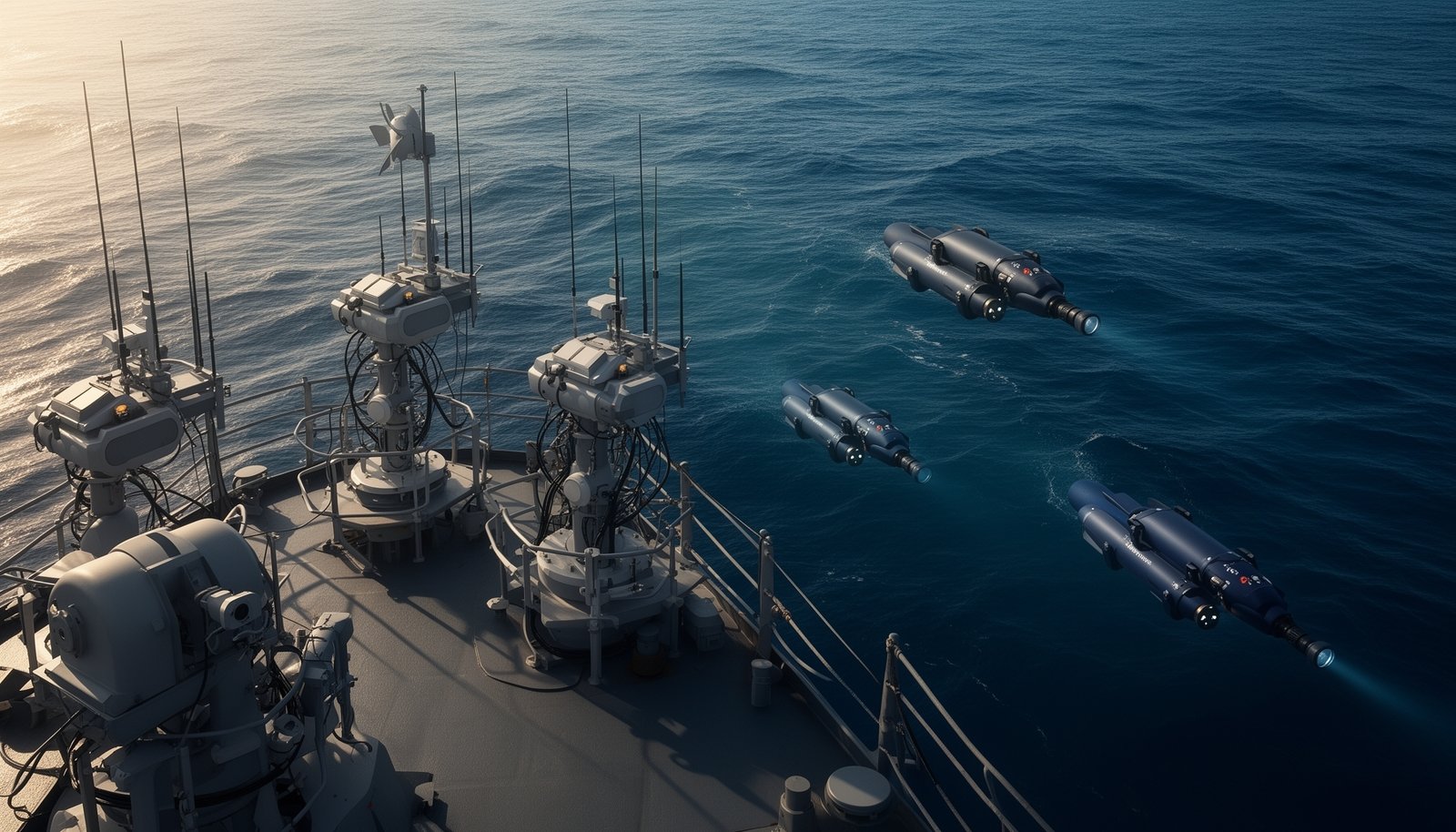
Autonomous Underwater Vehicles (AUVs) are another cornerstone in advanced submarine detection. These vehicles are equipped with sophisticated sensors and can operate independently for extended periods, gathering critical data about submarine activity beneath the waves.

Australia’s strategic use of AUVs enhances its capability to conduct extensive maritime surveillance without the need for human intervention. This is particularly advantageous in remote areas where traditional surveillance methods might be challenging to deploy. The integration of AUVs into Australia’s defence strategy represents a significant leap forward in maintaining maritime security.

Expert Perspective

Maritime Defence Analyst

In my view, these advancements position Australia as a leader in maritime defence, leveraging technology to safeguard its vast coastal borders. The integration of these technologies not only fortifies national security but also sets a precedent for global naval operations.

Quantum Sensing: A New Frontier

Quantum sensing offers another layer of sophistication in submarine detection. Utilising technologies such as Superconducting Quantum Interference Devices (SQUIDs), these sensors detect minute gravitational anomalies caused by submarines, providing data that is both precise and difficult to counteract.

The potential of quantum sensing technology is especially promising for Australia, given its expansive maritime borders. By deploying this technology, the Australian Defence Force can enhance its surveillance accuracy and stay ahead of potential threats from below the ocean surface.

Innovative Approaches with Synthetic Aperture Sonar

Synthetic Aperture Sonar (SAS) technology is transforming seabed mapping and the detection of submarines attempting to hide by resting on the ocean floor. SAS offers high-resolution imaging, which is crucial for identifying and tracking objects on the seabed.

In Australia, the utilisation of SAS is becoming increasingly common, allowing for detailed mapping of the ocean floor. This capability not only aids in submarine detection but also supports broader maritime research initiatives, offering insights into the complex undersea environment.

AI-Driven Edge Processing: Revolutionising Data Analysis

AI-driven edge processing is a game-changer in managing the vast amounts of data generated by sonar and other detection systems. By processing data at the source, these systems can swiftly filter out ‘ocean noise’ and identify genuine threats, thus streamlining the decision-making process.

This technology significantly reduces the burden on centralised data systems, allowing the Australian Navy to focus on actionable intelligence. The efficiency and speed offered by edge processing are essential for maintaining robust maritime security in Australia.

Frequently Asked Questions

AI-powered sonar systems use artificial intelligence to enhance the detection of submarines by processing sonar data more accurately and efficiently.

AUVs help by operating independently to gather data over long periods, offering extensive surveillance capabilities without human intervention.

Quantum sensing detects subtle gravitational anomalies caused by submarines, providing high precision data for better detection and tracking.

SAS provides high-resolution seabed imaging, crucial for identifying and tracking submarines resting on the ocean floor.

This involves real-time data processing at the source to filter out noise and deliver actionable intelligence quickly, enhancing security operations.

Scroll to Top