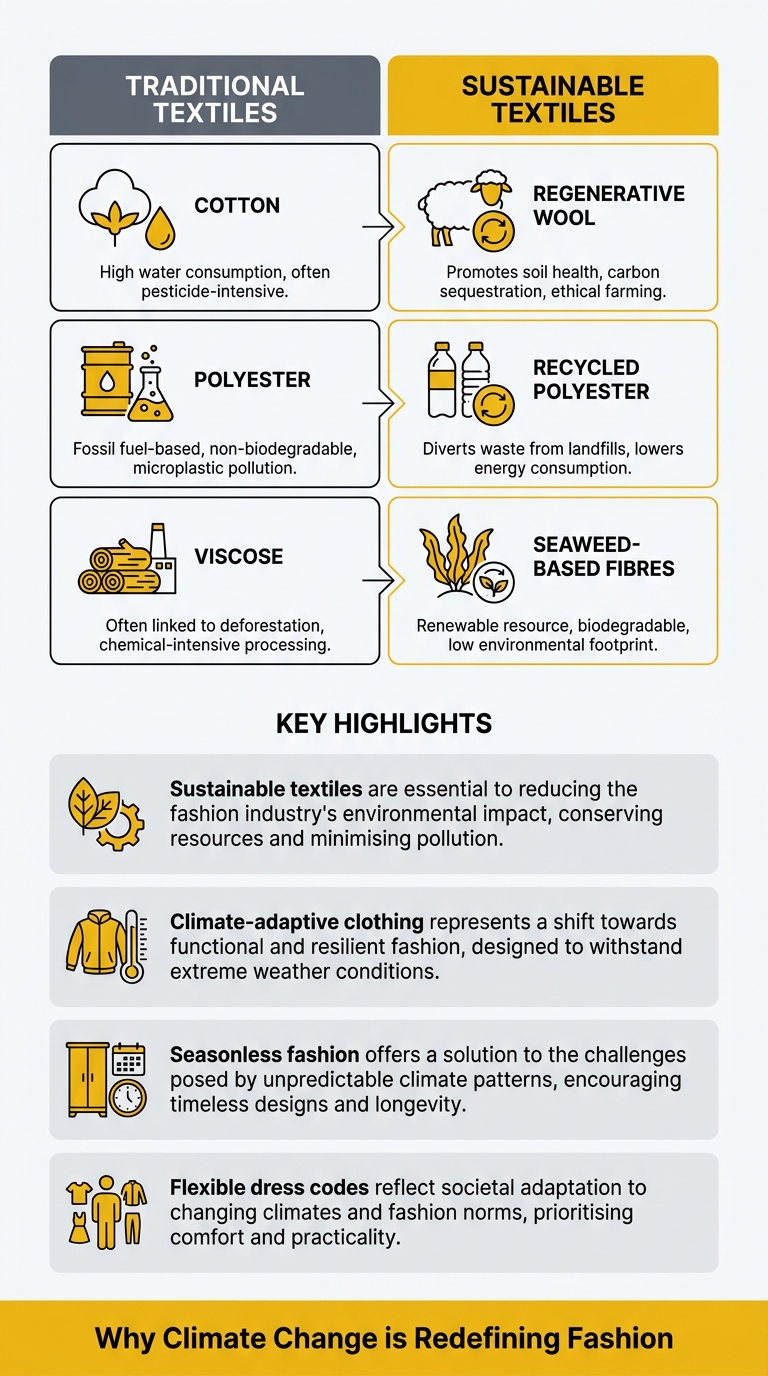
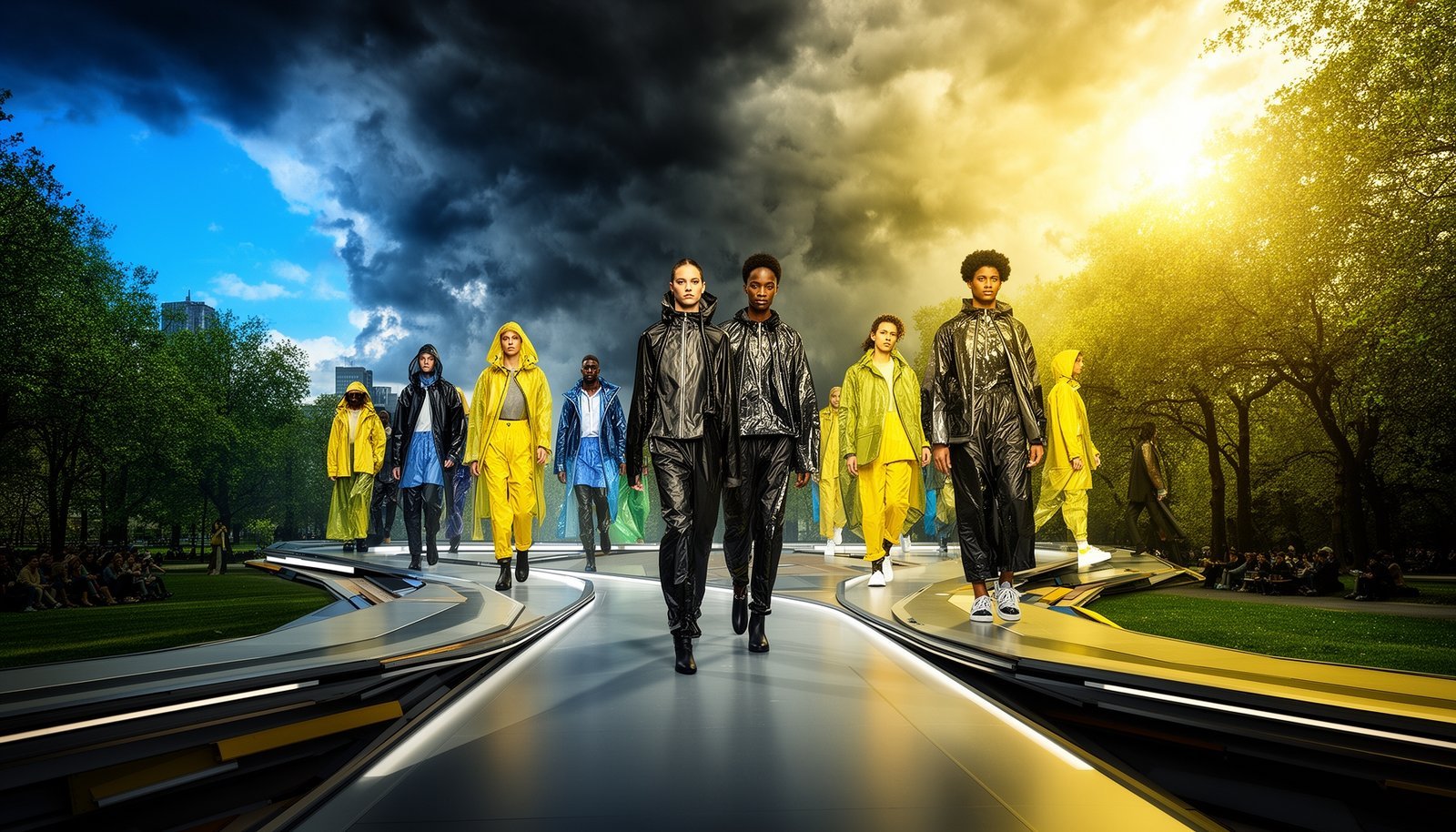
## Key Takeaways • Sustainable textiles are essential to reducing the fashion industry’s environmental impact. • Climate-adaptive clothing represents a shift towards functional and resilient fashion. • Seasonless fashion offers a solution to the challenges posed by unpredictable climate patterns. • Flexible dress codes reflect societal adaptation to changing climates and fashion norms. Key Answer Climate change is redefining fashion by driving the industry toward sustainable practices, adaptive clothing, and seasonless designs, all necessitated by environmental pressures and consumer demand. Climate change is not only reshaping our ecosystems, but it is also significantly altering the landscape of the fashion industry. The demand for sustainability and adaptability has never been more pressing, driving a profound transformation in how garments are designed, produced, and consumed. This article explores why climate change is redefining fashion, highlighting key innovations and challenges faced by the industry. ## The Push Towards Sustainable Textiles As the fashion industry grapples with the environmental impacts of traditional textile production, a shift towards sustainable textiles has become imperative. Fast fashion’s reliance on resource-intensive materials like cotton and polyester contributes significantly to carbon emissions. In response, the industry is exploring alternatives such as regenerative wool and seaweed-based fibres, which not only reduce environmental harm but actively contribute to ecosystem restoration. Sustainable textiles aim to minimise waste and pollution during production, helping mitigate the industry’s environmental footprint. According to the [Fashion Revolution](https://www.fashionrevolution.org/climatecrisis/), innovative materials are essential for building a resilient future for fashion amidst climate challenges. Traditional Textiles Sustainable Textiles Cotton Regenerative Wool Polyester Recycled Polyester Viscose Seaweed-based Fibres ## Climate-Adaptive Clothing: The Future of Fashion In the face of unpredictable weather patterns, fashion is moving towards climate-adaptive clothing. This emerging trend focuses on creating garments that are not only stylish but also functional, capable of regulating temperature and offering protection against various environmental conditions. These innovations reflect a significant shift from aesthetic-centric designs to practical, utilitarian solutions. Clothing designed for thermal regulation and durability is becoming more prevalent, responding to the need for apparel that meets the challenges posed by climate change. The development of this climate-adaptive gear is supported by advancements in material science and technology, fostering a new era of fashion resilience. Expert Perspective Fashion Sustainability Analyst The evolution of fashion in response to climate change signifies a pivotal moment for the industry. By adopting sustainable practices and embracing innovative materials, fashion brands can not only minimise their environmental impact but also align with the growing consumer demand for eco-friendly products. This shift is not merely a trend but a necessary adaptation to the pressing realities of climate change, which will continue to shape the industry’s future. ## The Rise of Seasonless Fashion The traditional fashion calendar with its rigid seasonal collections is becoming obsolete as climate unpredictability blurs the lines between seasons. This has led to the rise of seasonless fashion, where designers focus on creating versatile collections that can be worn year-round, addressing both environmental concerns and consumer preferences for timeless, flexible wardrobe choices. This approach not only reduces waste associated with unsold seasonal stock but also aligns with the growing consumer expectation for sustainable and durable clothing. As per the [Redress](https://redress.com.hk/educational-resource/how-circular-fashion-addresses-the-climate-crisis/), embracing a circular fashion model can significantly contribute to reducing the climate impact of fashion. ## Navigating Dress Code Changes in the Wake of Climate Change As the global climate shifts, so too do societal norms around dress codes. Workplaces, once strict in their attire expectations, are increasingly adopting flexible dress codes that accommodate a changing climate. This flexibility is not just a matter of comfort; it reflects a broader acceptance of eco-conscious and practical fashion choices. The need for adaptable clothing is driving innovation in design, pushing brands to offer options that are both suitable for office environments and resilient to weather variations. Such changes highlight the fashion industry’s adaptation to consumer needs driven by climate realities, emphasising the importance of sustainable practices in design and production. ## The Psychological Impact of Climate Change on Consumerism Climate change is reshaping consumer behaviour, with an increasing number of individuals seeking to reduce their environmental footprint through fashion. This has led to a burgeoning interest in the ‘degrowth’ movement, which prioritises quality over quantity, advocating for repair, rewear, and responsible consumption. Consumers are more conscious of the environmental implications of their purchases, opting for brands that demonstrate genuine commitment to sustainability. This shift in consumer mindset is driving brands to innovate and embrace transparency, sustainability, and ethical production methods. As detailed in [Earth Day’s Fashion for the Earth campaign](https://www.earthday.org/campaign/sustainable-fashion/), the push towards a sustainable fashion future is as much about consumer choice as it is about industry innovation. ## Frequently Asked Questions What are sustainable textiles? Sustainable textiles are materials produced in environmentally friendly ways, using resources that minimise waste and pollution. Why is seasonless fashion becoming popular? Seasonless fashion allows for flexible, year-round clothing collections that adapt to unpredictable weather and consumer demand for sustainable practices. How does climate change affect dress codes? Climate change influences dress codes by prompting more adaptable, eco-conscious fashion choices suitable for varied climates. What is the degrowth movement in fashion? The degrowth movement encourages minimalism, promoting quality over quantity and prioritising sustainable consumer habits. What role does consumer behaviour play in fashion’s response to climate change? Consumers drive fashion’s shift towards sustainability by demanding transparent, ethical, and eco-friendly products from brands. ## Sources & Further Reading • [Taking action on fashion and the climate crisis](https://www.fashionrevolution.org/climatecrisis/) • [How circular fashion addresses the climate crisis](https://redress.com.hk/educational-resource/how-circular-fashion-addresses-the-climate-crisis/) • [Fashion for the Earth](https://www.earthday.org/campaign/sustainable-fashion/) #SustainableFashion #ClimateChange #EcoFriendly