
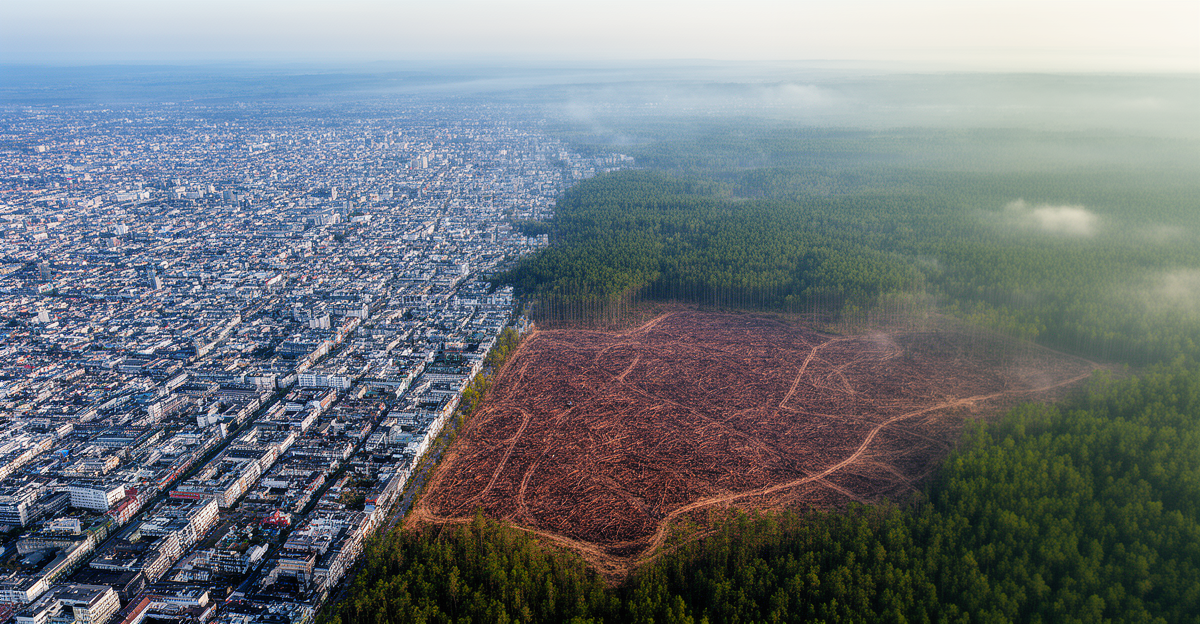
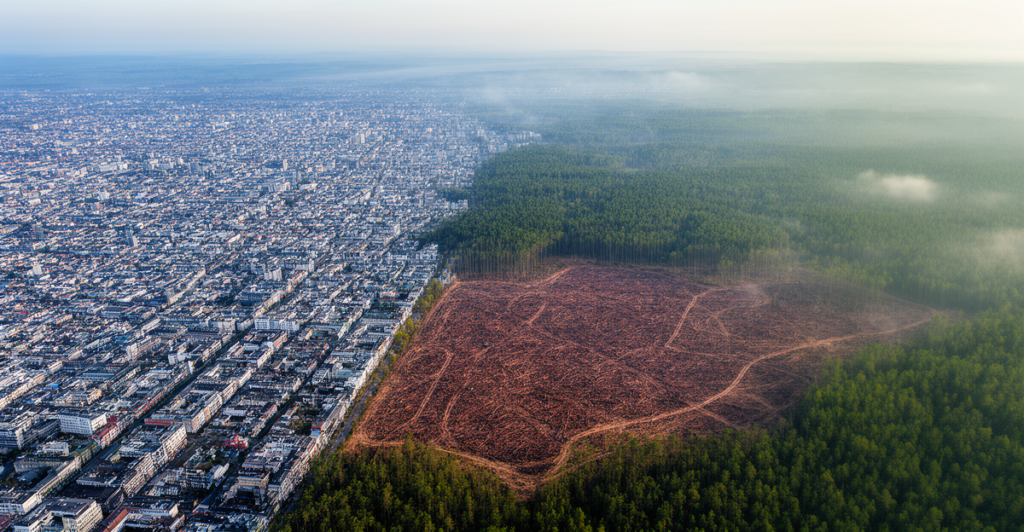
The human population has grown rapidly over the past century, transforming every aspect of Earth’s natural systems. From urban expansion to resource consumption, human impact extends across ecosystems, economies, and the climate.
Understanding the dynamics of population growth gives us insight into how we interact with the planet and the challenges we face in terms of sustainability, biodiversity, and future resource availability.
This article explores the relationship between the human population and the environment, how overpopulation presents long-term risks, and what it means for the survival of both humans and wildlife.
We’ll also look at the concept of a sustainable state in which a human population can survive indefinitely, and highlight some key global facts about forests, wildlife, and biodiversity under pressure.
If you’re wondering how human population fits into broader ecological systems, or how our numbers relate to the future of global ecosystems, this guide offers a clearer picture.
What Does the Human Population Mean in Ecological Terms?
In ecological science, a population refers to a group of individuals of the same species living in a defined area. For humans, this means the number of people living on Earth or within specific regions or countries.
When scientists refer to a human population in an ecosystem, they examine how people interact with available resources, other species, and environmental systems in that region.
- Human population is both a biological and social concept.
- It influences land use, water demand, and energy consumption.
- High population density can lead to habitat loss and species displacement.
- Urbanization often creates fragmented ecosystems and pollution.
Growth Trends and Key Overpopulation Facts
The global human population crossed 7.6 billion in 2018 and continues to rise. While population growth rates have slowed in some countries, others are experiencing rapid increases, adding pressure to their environmental and economic systems.
Overpopulation occurs when the number of individuals surpasses the carrying capacity of their environment – the point where resources cannot sustain the population without degrading.
- According to overpopulation facts 2018, the global population grew by over 80 million that year.
- Demand for food, water, and housing increases non-linearly with population growth.
- By 2050, Earth’s population could reach 9.7 billion, intensifying resource strain.
- Overpopulation drives deforestation, soil depletion, and biodiversity loss.
Impact on Wildlife and Ecosystems
The relationship between human population and wildlife is increasingly imbalanced. As humans clear land for agriculture, roads, and settlements, habitats shrink or disappear altogether.
Species that depend on stable forests or isolated habitats are especially vulnerable. Deforestation, pollution, and carbon emissions reduce not only biodiversity but also the ecosystem services essential for human survival.
- The ‘human population and wildlife’ connection highlights declining species due to habitat encroachment.
- The FAO 2016 and 2017 global forest products facts and figures noted consistent global declines in natural forest cover.
- According to NASA, forest cover was around 31% of Earth’s land area in 2020.
- The population of monkeys and other primates is dwindling due to habitat loss and hunting.
What Is a Sustainable Population?
A sustainable state, or a ‘state in which a human population can survive indefinitely,’ means maintaining a balance between population size and the resources available within a given ecosystem.
This includes responsible consumption, technological efficiency, and ecological boundaries. It also requires equitable access to resources and long-term planning on both global and local levels.
- A stable or slowly declining population helps ecosystems recover.
- Education and access to healthcare can support sustainable population levels.
- Renewable resource use must align with natural regeneration rates.
- Sustainable agriculture, energy, and land-use practices are essential.
Human Populations and Their Role in Forest Use
Forests play a critical role in supporting human life, biodiversity, and climate regulation. Population growth often increases pressure on forests through logging, agriculture, and land development.
According to the FAO’s 2016 and 2017 global forest products facts and figures, global trade in forest products has soared, raising concerns about unsustainable extraction in some regions.
- Forests store carbon and protect watersheds.
- Logging and agriculture are major drivers of deforestation.
- Population growth boosts demand for timber, fuelwood, and paper.
- Monitoring forest product trends is key to forest conservation.
Frequently Asked Questions
It refers to the number of individuals of a species living in a specific area, interacting with the environment and other organisms.
Human expansion reduces habitats, leading to species decline, fragmentation, and extinction risks.
It means a population size that can be maintained over time without exhausting natural resources or harming ecosystems.
The world added over 80 million people in 2018, increasing strain on resources, especially in rapidly growing regions.
NASA data from 2020 shows that about 31% of the world’s land surface is covered by forests.
Exact numbers vary by species, but many monkey populations are declining due to deforestation and hunting.
They typically explore how primate populations, including humans, interact with ecological and evolutionary concepts.
Next Steps
undefined