
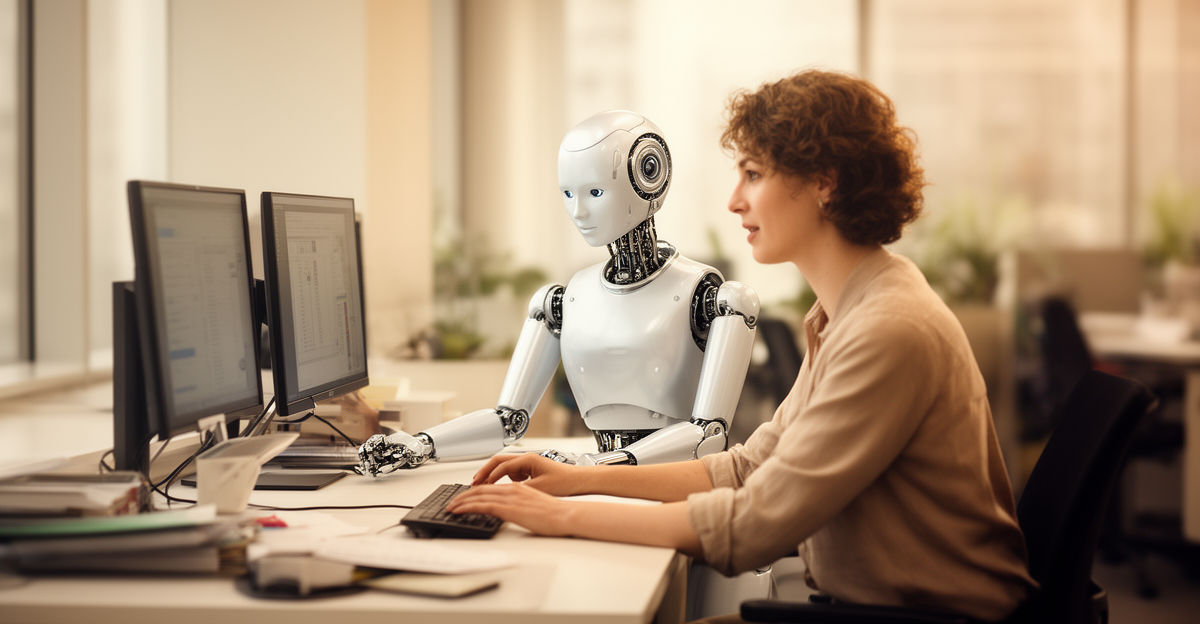
The rapid evolution of Artificial Intelligence has sparked countless debates about the future of work. One of the most pressing questions remains: will AI replace humans?
From automation in manufacturing to chatbots in customer service, AI is transforming industries. But is this transformation a threat to human employment, or a chance to reimagine the workforce?
This article explores the potential of AI to take over certain jobs, what it means for human workers, and how we can prepare for a future shaped by machines.
Rather than fearing a robot takeover, it’s time to focus on how humans and AI can work together — and what skills will matter most in the years ahead.
How AI Will Replace Human Jobs: The Current Reality
AI is already changing how work gets done. Tasks that are repetitive, rule-based, or data-driven are being automated across industries.
For example, robots can now assemble cars more efficiently than humans, and AI software can scan legal documents in minutes rather than hours.
While AI is replacing some specific roles, it’s also creating new demand for tech-savvy workers who can build, manage, and improve these systems.
- AI excels at repetitive and predictable tasks
- Industries like manufacturing, logistics, and finance see the most automation
- Humans are still needed for decision-making, empathy, and creativity
What Jobs Will AI Replace in the Coming Years?
Jobs that involve manual labor or routine processes are at the highest risk of being automated as AI capabilities continue to improve. That includes some surprising sectors, such as healthcare diagnostics and basic legal consultations.
However, complete replacement is rare — in most cases, AI takes over a portion of the job, while humans focus on higher-order tasks.
- Data entry and processing roles
- Customer service representatives (via chatbots)
- Toll booth and cashier jobs
- Basic paralegal and accounting tasks
- Transportation (e.g., self-driving delivery vehicles)
The Impact of AI on Human Employment
The impact of AI on human employment is complex. While it may eliminate some jobs, it also creates new roles that require human oversight, innovation, and emotional intelligence.
History shows that technology typically leads to job transformation, not total eradication. What changes is the nature of the work, not the need for people.
- Displacement of low-skill roles is likely
- Demand for AI engineers, data analysts, and cybersecurity experts is growing
- Hybrid job roles combining human and machine strengths are emerging
Can AI Fully Replace Humans?
Despite rapid advancements, the answer to can AI fully replace humans is — not anytime soon.
AI lacks core human abilities like empathy, critical thinking in ambiguous situations, and cross-disciplinary adaptability. These are essential in leadership, education, healthcare, and creative industries.
- AI can’t replicate human emotion, intuition, or ethics
- Team management, caregiving, and artistic roles remain human-dominated
- Human creativity and adaptability still outperform machines
How to Prepare for AI Job Replacement
The best defense against job loss is investing in future-ready skills. Workers who understand both the technology and the human side of business will always have value.
As the future of AI and human workforce unfolds, lifelong learning and adaptability will be essential.
- Upskill in AI, data science, or tech-aligned roles
- Develop soft skills like communication and emotional intelligence
- Stay informed about emerging industries and evolving job markets
- Embrace cross-training and interdisciplinary knowledge
Frequently Asked Questions
No, AI may replace certain tasks or roles, but most jobs will evolve rather than disappear completely.
Repetitive, rule-based jobs like data entry, customer service, and basic accounting are the most at risk.
No, AI lacks human characteristics like empathy, intuition, and creativity needed in such fields.
Focus on learning new technology, strengthening communication skills, and staying adaptive to change.
Yes, many new roles are emerging in AI development, analysis, ethics, and oversight.
It’s both — a challenge for some, but also a huge opportunity to re-skill and grow in new directions.
Healthcare, education, arts, and leadership roles where human interaction is key remain less affected.