

Key Takeaways
- AI is significantly impacting Australia’s creative industries, enhancing content creation and personalisation.
- Sustainability efforts in Australia are accelerated by AI, particularly in energy management and agriculture.
- AI is transforming retail by providing personalised customer experiences and efficient inventory management.
- Educational sectors are integrating AI to personalise learning and streamline administrative processes, preparing students for future challenges.
Key Answer
AI is revolutionising modern industries by enhancing efficiency, driving innovation, and enabling new business models, especially in Australia. Key sectors like retail, manufacturing, and education are witnessing transformative changes.
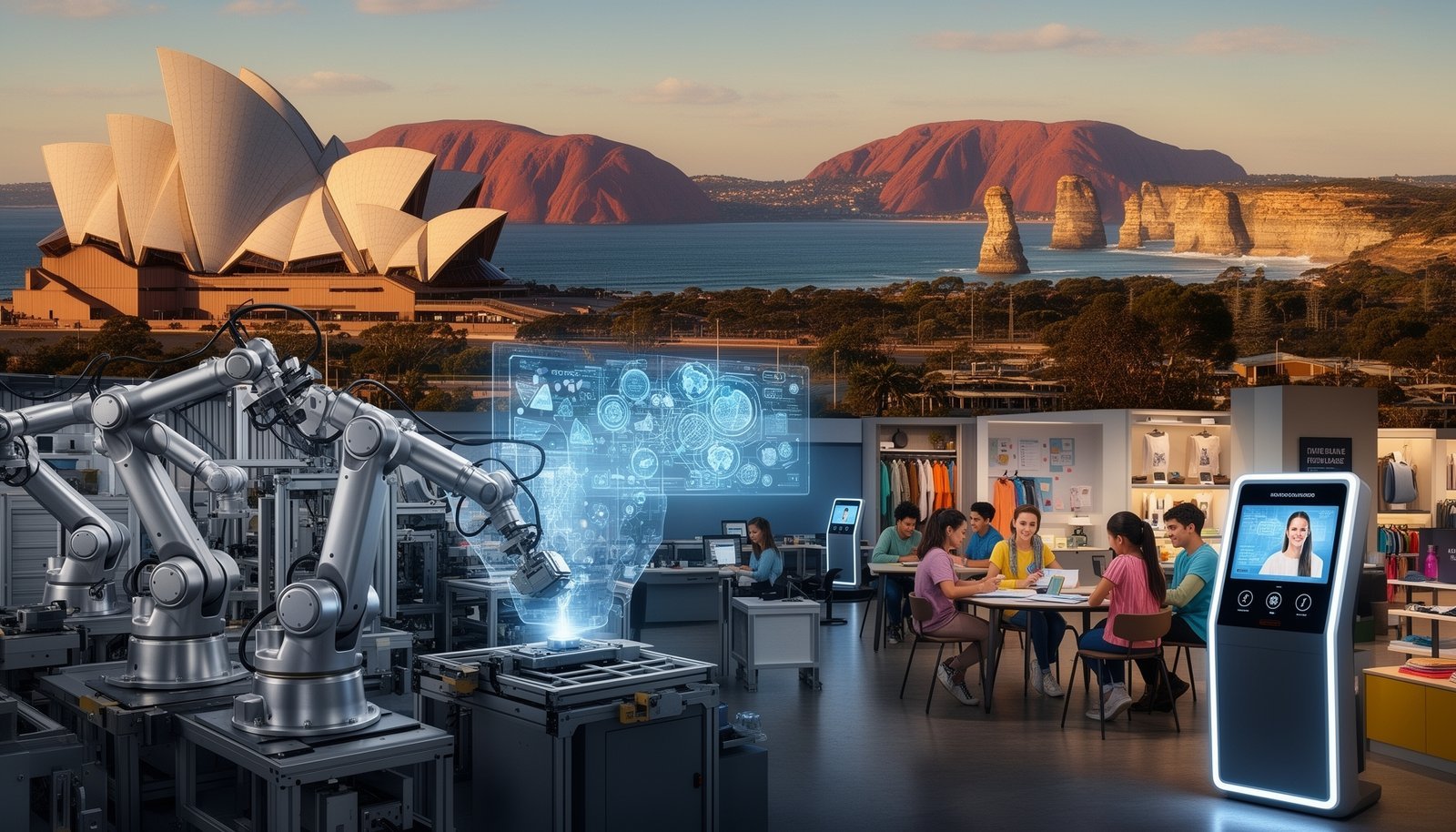
Artificial Intelligence (AI) is not just a buzzword; it’s a dynamic force reshaping the contours of modern industries across the globe, particularly in Australia. From creative sectors to retail, AI is setting the stage for unparalleled innovation and efficiency. The profound impact of AI is being felt across various sectors, affirming why AI is revolutionising modern industries in ways previously unimaginable.
AI in Creative Industries: Unleashing New Potential
In Australia’s creative industries, AI is revolutionising processes by introducing new tools and techniques that enhance creativity and streamline production. AI applications such as machine learning and natural language processing are transforming how content is created and consumed. For example, AI-driven design tools allow graphic artists to experiment with various styles and formats swiftly, while automated editing software saves time and boosts efficiency.
Moreover, AI is opening up possibilities for hyper-personalisation in content delivery, tailoring experiences to individual preferences. This is particularly evident in media and entertainment, where AI analyses audience data to recommend shows and films, thus maximising engagement. This demonstrates the transformative potential AI holds for creative professionals aiming to elevate their craft.
Sustainability and Green Energy: AI's Role in ESG
Australia’s commitment to sustainability is significantly bolstered by AI-driven solutions in energy management and environmental conservation. AI technologies are pivotal in optimising resource utilisation and reducing carbon footprints. Smart grids powered by AI enable more efficient energy distribution, while predictive analytics foresee energy demand fluctuations, ensuring better resource allocation.
Moreover, AI supports green initiatives by enabling precision agriculture, where data-driven insights optimise water usage and crop yield, essential for Australia’s vast agricultural landscapes. These advancements highlight how AI not only supports environmental goals but also enhances economic sustainability through smarter resource management.
Expert Perspective
AI Integration Specialist
AI’s transformative potential across various sectors is becoming increasingly apparent. As an expert, it’s clear that Australia’s proactive approach in adopting AI innovations is not just reshaping industries, but setting a new standard for global competitiveness.
Transforming Retail and the E-commerce Experience
The retail landscape in Australia is undergoing a seismic shift due to AI integration. AI-driven analytics provide retailers with insights into consumer behaviour, enabling more effective inventory management and personalised marketing strategies. Chatbots and virtual assistants enhance customer service, offering 24/7 support and streamlining the shopping experience.
Additionally, AI applications in e-commerce, such as automated logistics and real-time data analytics, facilitate smoother operations and reduce operational costs. The personalisation capabilities of AI allow for tailored recommendations, enhancing the customer journey and increasing satisfaction. This transformation is redefining retail dynamics, ensuring businesses stay competitive in a rapidly evolving market.
AI in Education: Preparing for the Future Workforce
Education in Australia is embracing AI to prepare students for a future where digital literacy is paramount. AI tools are being used to personalise learning experiences, catering to the individual needs of students. Adaptive learning platforms assess a student’s strengths and weaknesses, tailoring content to optimise their educational journey.
Furthermore, AI is streamlining administrative processes within educational institutions, reducing the burden on staff and allowing more focus on student engagement. From automating routine tasks to enhancing the learning experience through virtual reality and AI-powered simulations, the potential for AI in education is vast. This progression ensures that the future workforce is well-equipped with the skills necessary for an AI-driven economy.
Predictive Maintenance and Digital Twins in Manufacturing
In Australia’s manufacturing sector, AI is central to implementing predictive maintenance and digital twins. These technologies enhance operational efficiency by anticipating equipment failures and optimising production processes. AI algorithms analyse data from IoT devices to predict machinery breakdowns, reducing downtime and maintenance costs.
Digital twins, virtual replicas of physical systems, enable manufacturers to simulate and optimise operations, improving product design and production efficiency. This integration of AI into manufacturing not only boosts productivity but also fosters innovation by allowing real-time analysis and adjustments. As a result, industries can maintain competitiveness and address the challenges of an increasingly automated world.
Frequently Asked Questions
AI in retail is enhancing customer experiences through personalised recommendations, efficient inventory management, and improved customer service with chatbots and virtual assistants.
AI facilitates sustainability by optimising energy use, enabling precision agriculture, and supporting smart grid technologies, thus contributing to environmental conservation and economic sustainability.
AI in education personalises learning experiences, streamlines administrative tasks, and incorporates advanced technologies like virtual reality to enhance student engagement.
AI improves manufacturing efficiency through predictive maintenance and digital twins, reducing downtime and costs while enhancing operational productivity.
AI tools assist in content creation and personalisation, allowing creative professionals to innovate and engage audiences effectively.