
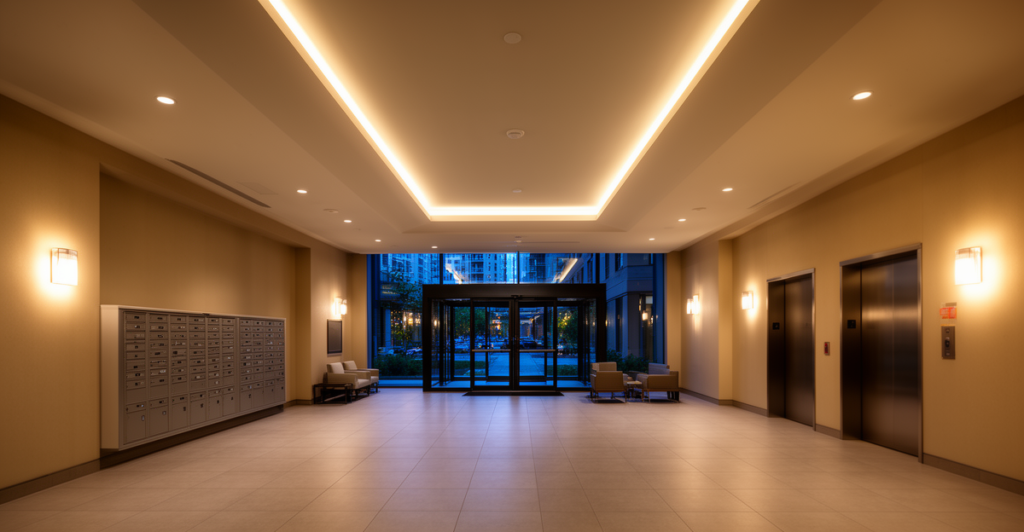
Common area lighting and power are essential factors in the design and operation of residential, commercial, and mixed-use buildings. These shared spaces require careful planning to ensure functionality, safety, and energy efficiency.
Whether it’s a corridor in a residential complex, a lobby in an office building, or a communal lounge in a hotel, the lighting and power systems must meet the needs of all users while complying with safety standards.
Poorly planned systems can lead to excessive energy costs, inadequate illumination, or even pose safety risks. That’s why it’s important to understand the key principles behind the layout and maintenance of common area lighting and power.
In this article, we’ll break down what goes into designing efficient and effective lighting setups for public and shared spaces, including key electrical considerations, modern technologies, and best practices.
Whether you’re managing a property, designing a new project, or retrofitting an old building, these tips will help optimize performance and user satisfaction.
What Is Common Area Lighting and Power?
Common area lighting and power refer to the electrical infrastructure that serves shared spaces in buildings. These areas include hallways, stairwells, lobbies, elevators, parking garages, and outdoor walkways.
Unlike individual meters for private units, common area systems are typically powered by a master meter and maintained by the property owner or management team.
- Covers non-residential or non-commercial spaces used by all occupants
- Usually controlled centrally and provided as part of building amenities
- Essential for safety, navigation, and user comfort
Key Considerations for Lighting Design
Effective lighting in common areas goes beyond simply installing fixtures. It’s about designing for visibility, ambience, and sustainability.
Lighting should match the purpose of the space. For instance, brighter lighting is needed in stairwells for safety, while softer lighting may suit a lounge or waiting area.
- Use LED fixtures for energy efficiency and durability
- Layer lighting with ambient, task, and accent types for flexibility
- Ensure even light distribution to avoid dark spots or glare
- Use motion sensors and timers where appropriate to save energy
Power Requirements and Load Planning
Power planning ensures common areas are not only well-lit but also equipped with the right infrastructure to support other needs like security systems, elevators, and electrical outlets.
A well-balanced load prevents circuit overloading and ensures smooth operation of connected systems.
- Calculate load demand based on total expected usage
- Use dedicated circuits for essential systems like emergency lighting and alarms
- Incorporate surge protection and voltage regulation equipment
Safety and Compliance Standards
All electrical and lighting installations in common areas must comply with national or regional safety codes. These typically cover installation practices, emergency backup systems, and minimum illumination levels.
Following these guidelines ensures both the legal safety of the building and the well-being of occupants.
- Install emergency lighting connected to backup power
- Use weatherproof fixtures in outdoor areas
- Adhere to local building and fire codes for all installations
- Ensure accessibility of lighting controls for maintenance teams
Smart Controls and Energy Management
Modern systems increasingly include smart technology, allowing for automated lighting, real-time energy monitoring, and remote management.
These tools help reduce operational costs while also offering better user experiences.
- Implement motion or occupancy sensors to reduce idle energy use
- Integrate with Building Management Systems (BMS) for centralized control
- Monitor energy consumption with smart meters or apps
- Schedule lighting based on times of day or usage patterns
Maintenance and Long-Term Efficiency
Ongoing maintenance is essential to keep common area lighting and power systems functioning optimally. This includes regular inspections, timely replacements, and system updates.
Preventive maintenance helps avoid unexpected outages and prolongs the life of the equipment.
- Set up routine inspection schedules for lighting and outlets
- Keep records of energy usage and equipment performance
- Replace worn-out fixtures with high-efficiency alternatives
- Ensure quick repairs to maintain consistent lighting levels
Frequently Asked Questions
Common areas include spaces shared by all occupants such as lobbies, hallways, elevators, stairwells, and outdoor walkways.
It enhances safety, assists with navigation, improves appearance, and contributes to the overall usability of the space.
Building owners or managers typically cover these costs, often through communal fees or service charges.
Yes, LED lights are suitable for most applications due to their long lifespan and energy efficiency.
Use motion sensors, timers, high-efficiency fixtures, and smart energy management tools.
Electrical installations must comply with local codes, and permits may be required depending on the scope of work.
Regular inspections, bulb replacements, wiring checks, and system updates are essential for reliability and safety.
Next Steps
undefined