
Key Takeaways
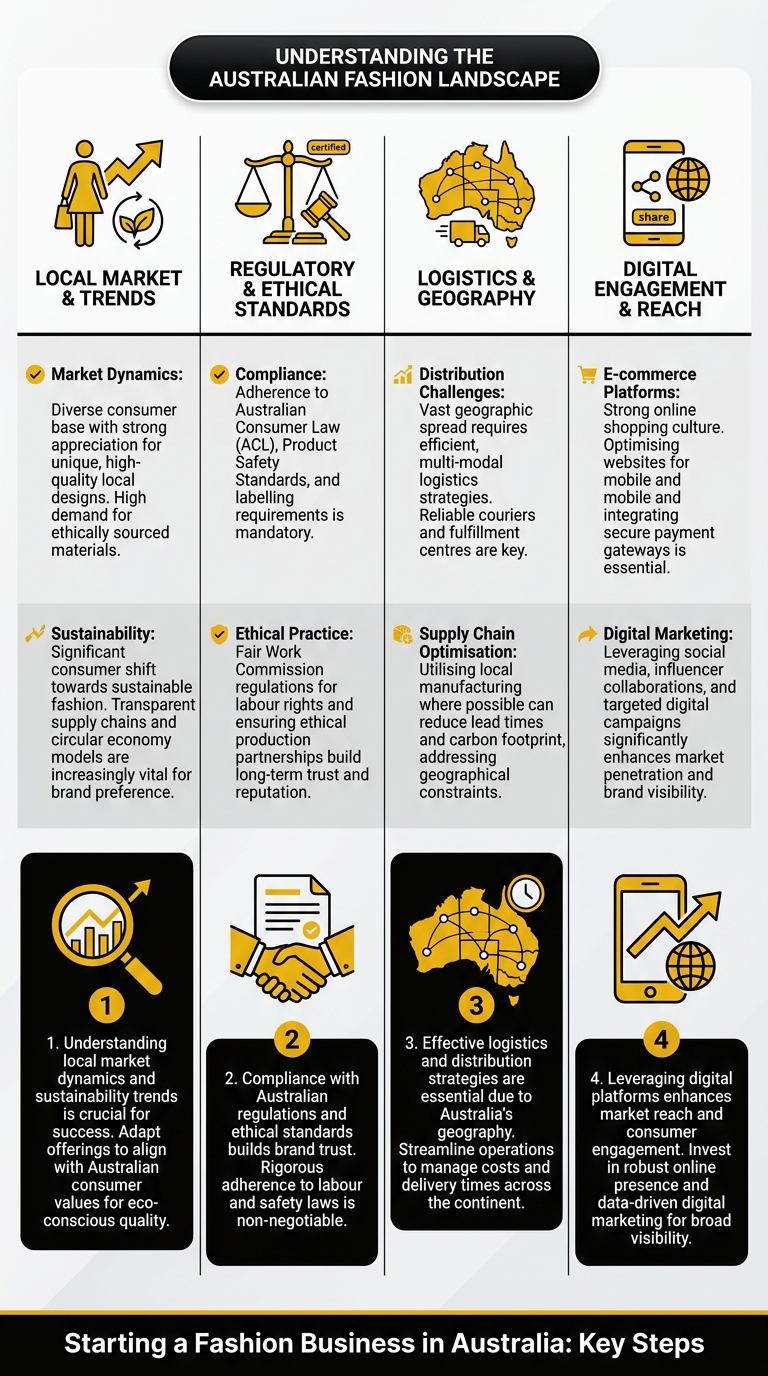
- Understanding local market dynamics and sustainability trends is crucial for success.
- Compliance with Australian regulations and ethical standards builds brand trust.
- Effective logistics and distribution strategies are essential due to Australia’s geography.
- Leveraging digital platforms enhances market reach and consumer engagement.
Key Answer
Discover essential steps for starting a fashion business in Australia, including compliance with local regulations, understanding market trends, and establishing effective logistics and distribution networks.
Starting a fashion business in Australia requires a comprehensive understanding of the unique challenges and opportunities within the local market. New entrepreneurs must navigate a complex landscape of regulations, trends, and consumer expectations to establish a successful brand. This article outlines key steps for budding fashion entrepreneurs to successfully launch their ventures in Australia.
Understanding the Australian Fashion Landscape
To start a successful fashion business in Australia, one must first understand the unique aspects of the local market. The Australian fashion industry is shaped by a diverse demographic and a strong emphasis on sustainability and ethical practices. Awareness of these trends is crucial, as Australian consumers increasingly demand transparency in production processes and favour brands that commit to ethical sourcing.
Australia’s geographic isolation presents both challenges and opportunities. While shipping costs can be higher, there is less competition from international brands, giving local companies a chance to establish strong market positions. Engaging with local fashion events, such as Melbourne Fashion Week, can provide insights into emerging trends and help build industry connections.
Essential Steps to Launch a Fashion Business
The process of starting a fashion business in Australia involves several critical steps, from conceptualisation to market entry. New entrepreneurs should follow a structured plan that includes:
Market Research: Conducting thorough research to understand target audiences and identifying gaps in the current market offerings.
Business Planning: Developing a comprehensive business plan that outlines your brand vision, target market, financial projections, and marketing strategies.
Legal and Regulatory Compliance: Registering the business with the Australian Business Number (ABN) and Goods and Services Tax (GST) is essential. Understanding compliance requirements related to the Australian Consumer Law (ACL) is also crucial.
Sourcing and Production: Finding reliable suppliers for materials and ensuring that production aligns with ethical standards. Consider local manufacturers to support Australian Made initiatives.
Brand Development: Creating a distinctive brand identity that resonates with the target audience. This includes designing a logo, developing brand messaging, and establishing an online presence.
Distribution and Sales Channels: Exploring both traditional retail outlets and online platforms. Listing on Australian marketplaces like The Iconic can enhance visibility.
Expert Perspective
Fashion Business Consultant
In today’s rapidly evolving fashion landscape, new entrepreneurs must prioritise sustainable practices and digital engagement to succeed. Australia’s unique market conditions offer opportunities for brands committed to ethical sourcing and innovation.
Navigating Compliance and Ethical Standards
Compliance with local regulations and ethical standards is a cornerstone of establishing a fashion business in Australia. Entrepreneurs must ensure their products meet care labelling standards, fibre content disclosures, and consumer guarantees. Registering with IP Australia for design rights and trademarks can protect intellectual property and enhance brand value.
Additionally, aligning with initiatives like Ethical Clothing Australia can improve brand reputation and consumer trust. This certification assures customers that the brand adheres to fair labour practices and sustainable sourcing methods, which is increasingly important to Australian consumers.
Logistics and Distribution Strategies
Effective logistics and distribution strategies are vital for overcoming Australia’s geographical challenges. Entrepreneurs should consider partnering with local providers like AusPost, Sendle, and StarTrack to optimise shipping costs and delivery times. Comparing costs and services through a shipping cost comparison tool can aid in selecting the best option for the business.
Moreover, exploring third-party logistics (3PL) can be beneficial for startups, allowing them to focus on core business activities while outsourcing warehousing and distribution needs. Establishing a reliable supply chain is critical for maintaining product quality and meeting consumer expectations.
Leveraging Fashion Trends to Capture the Market
Staying ahead of fashion trends is essential for capturing consumer interest and driving sales. In Australia, there is a growing trend towards sustainable and ethical fashion, with consumers seeking out brands that offer environmentally friendly products. Incorporating these elements into your brand can differentiate it from competitors.
Attending fashion shows, participating in industry webinars, and networking within fashion communities can help entrepreneurs stay informed about the latest trends. Tools like social media analytics can also provide insights into consumer preferences and emerging styles.
Maximising Online Presence and Engagement
An effective online presence is crucial for reaching a wider audience and driving brand growth. Entrepreneurs should focus on creating an intuitive and engaging website, which enhances the customer experience and drives user engagement. Integrating an e-commerce platform can expand market reach beyond local borders.
Additionally, leveraging social media platforms and online marketplaces can increase brand visibility. Strategies such as collaborating with influencers and engaging with followers through interactive content are effective in building a loyal customer base.
Considering the benefits of mobile applications versus websites can further enhance consumer interaction and improve sales conversion rates.
Frequently Asked Questions
What are the main steps to start a fashion business in Australia?
Key steps include understanding the market, complying with regulations, sourcing materials, developing a brand, and establishing distribution channels.
How important is sustainability in the Australian fashion industry?
Sustainability is highly important as consumers favour brands that are environmentally friendly and ethically sourced.
What platforms can help increase visibility for a fashion brand in Australia?
Platforms like The Iconic and social media channels are effective for increasing brand visibility and reaching a broader audience.
Why is compliance crucial when starting a fashion business in Australia?
Compliance ensures legal operations and builds consumer trust, which is vital for brand success in the Australian market.
How can new fashion entrepreneurs leverage digital tools for success?
By enhancing online presence, using e-commerce platforms, and engaging with consumers through social media and mobile applications.
—
Sources & Further Reading
- How to Start a Clothing Business in Australia
- Starting a Clothing Brand in Australia
- How to Start a Fashion Business in Australia in 2025
- The True Cost to Start a Fashion Label in Australia
- customer experience
- benefits of mobile applications
#FashionBusiness #AustralianFashion #EthicalFashion
 Data Infographic
Data Infographic