
Key Takeaways
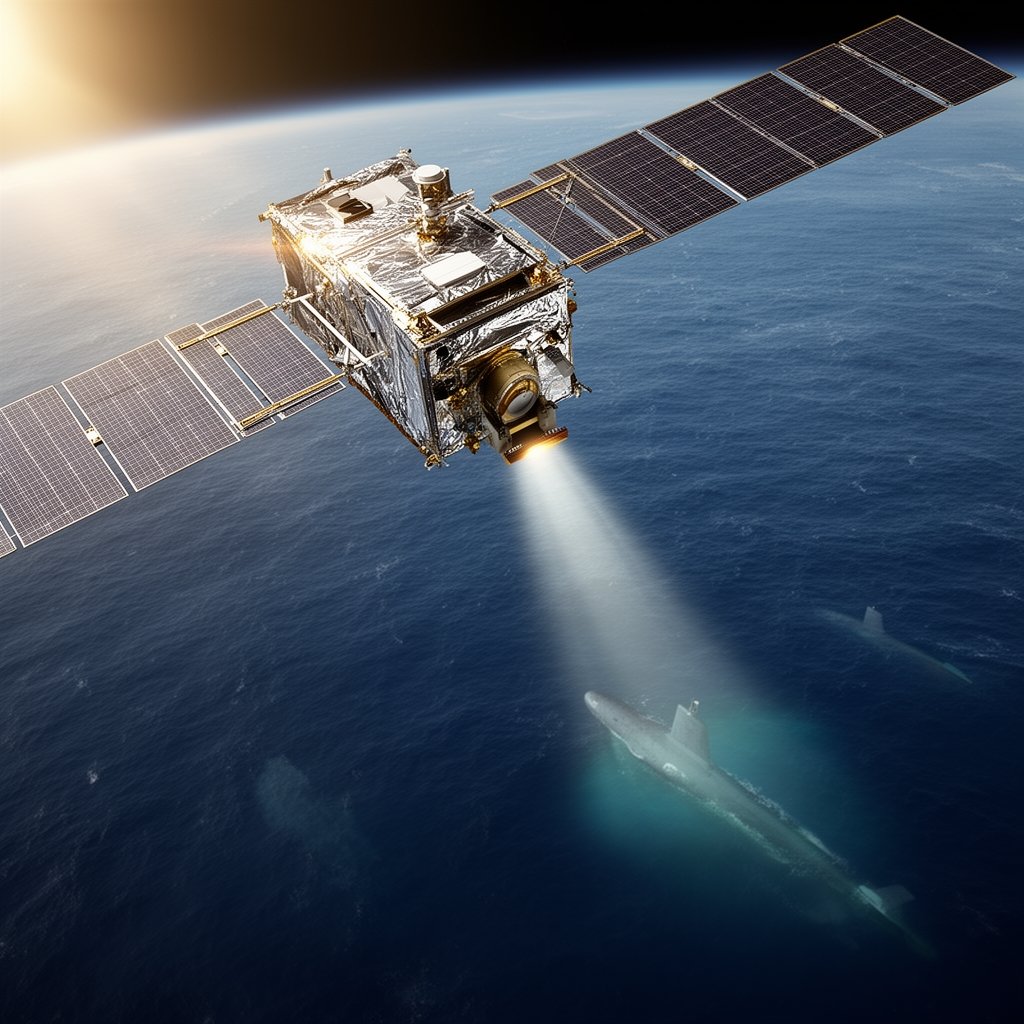
- •Satellites cover vast ocean areas, providing unparalleled submarine detection capabilities.
- •Non-acoustic detection techniques, such as infrared sensors, enhance tracking efficiency.
- •AI integration improves data processing, leading to more accurate and timely detections.
- •Satellites offer significant strategic advantages in global military surveillance.
Key Answer
Satellites excel in submarine detection due to their ability to cover vast ocean areas, utilising advanced sensors and AI technologies. They provide real-time data, enabling efficient tracking of underwater vessels, crucial for military surveillance and oceanic studies.
Why do satellites excel in submarine detection? This question delves into a fascinating intersection of advanced technology and strategic defense. Satellites, with their high vantage point and cutting-edge sensors, provide unprecedented capabilities in military surveillance and ocean monitoring. As naval powers around the globe enhance their submarine fleets, the ability to detect and track these underwater vessels from space has become a critical component of modern defense strategies.
The Mechanics of Satellite Surveillance
Satellites are positioned at various altitudes in Earth’s orbit, each serving distinct roles in surveillance and monitoring. Their strategic position allows them to cover expansive oceanic regions, impossible for ground-based systems to match. With the integration of technologies such as Synthetic Aperture Radar (SAR), satellites can penetrate clouds and darkness to detect anomalies on the ocean’s surface, indicative of submarine activity. Additionally, advancements in AI enable these satellites to process large data sets and identify patterns that may suggest the presence of submarines.
Non-Acoustic Detection Techniques
Traditional submarine detection has largely relied on acoustic methods such as sonar. However, satellites utilize non-acoustic techniques, which have grown increasingly effective. These include detecting subtle changes in the ocean’s surface caused by submarines as they move underwater. For instance, infrared sensors can identify temperature differentials on the surface, while LIDAR technology offers precise measurements of sea levels and surface disturbances.
| Technique | Functionality | Advantages |
|---|---|---|
| Infrared Sensors | Detects heat variations on the ocean surface | Effective in various weather conditions |
| LIDAR | Measures surface disruptions | High precision and real-time data |
| SAR | Penetrates clouds and darkness | Wide area coverage |
Expert Perspective
Defense Technology Analyst
In my experience as a defense technology analyst, satellites have become indispensable in modern military operations, particularly in submarine detection. Their global reach and advanced technological integration offer a level of surveillance that is unmatched by traditional methods. As AI continues to evolve, the future of satellite-based monitoring looks promising, potentially revolutionizing how we perceive and respond to underwater threats.
AI and Machine Learning Integration
The integration of AI and machine learning into satellite systems has revolutionized submarine detection. These technologies enhance data processing capabilities, allowing satellites to analyze oceanographic data with unprecedented speed and accuracy. AI algorithms can identify potential submarine activity by cross-referencing current data with historical patterns. This predictive capability not only improves the accuracy of detections but also reduces false alarms, making military responses more efficient.
Enhancing National Security Through Satellite Surveillance
The Challenge
A national defense agency tasked with monitoring underwater threats integrates satellite-based detection systems into their operations.
The Result
The agency reports a 30% increase in the detection of submarine movements and a significant decrease in false alarms, allowing for more focused and effective military strategies.
Strategic Advantages in Military Surveillance
The strategic advantage of satellites in military surveillance cannot be overstated. By providing a global view of oceanic activities, satellites allow nations to monitor potential threats continuously. This ability to track the movement of submarines in real-time enhances national security and informs strategic military decisions. Moreover, the real-time data offered by satellites facilitates rapid response measures, crucial in today’s fast-paced geopolitical environment.
Challenges and Future Prospects
Despite their advantages, satellite-based submarine detection faces challenges. For example, submarines are continually evolving to avoid detection, employing advanced stealth technologies. Additionally, the interpretation of satellite data requires high expertise and is resource-intensive. However, the future holds promising advancements, such as the development of more sophisticated sensors and enhanced AI capabilities, which are expected to further augment the effectiveness of satellite surveillance.
Frequently Asked Questions
Satellites detect submarines using non-acoustic techniques such as infrared sensors, LIDAR, and Synthetic Aperture Radar to identify anomalies on the ocean’s surface.
Satellites offer wide-area coverage, real-time data, and the ability to detect submarines in various weather conditions, making them highly effective for military surveillance.
AI enhances data processing capabilities, allowing for rapid analysis of oceanographic data to identify potential submarine activity and improve detection accuracy.
Challenges include advanced submarine stealth technologies and the complexity of data interpretation, but ongoing advancements in AI and sensors are addressing these issues.
Non-acoustic techniques like infrared sensors and LIDAR detect surface anomalies and temperature variations, while sonar relies on sound waves to identify underwater objects.