
Key Takeaways
- Frequent tripping of circuit breakers is a critical sign of switchboard overload.
- Burn marks around the switchboard indicate serious electrical faults.
- Compliance with AS/NZS 3000 is essential for safety and insurance purposes.
Key Answer
Learn the 7 key signs indicating your home needs a switchboard inspection, essential for ensuring electrical safety and compliance in Australia.
In the heart of every Australian home lies an unsung hero: the switchboard. It’s the control centre of your electrical system, managing the flow of power throughout the house. However, as homes evolve with the addition of modern technology like EV chargers and solar panels, the demands on this vital component increase. This article explores the 7 signs your home needs a switchboard inspection to ensure safety and compliance with current standards.
Frequent Circuit Breaker Trips
A circuit breaker tripping is your electrical system’s way of saying it’s under stress. Frequent trips may indicate the switchboard is struggling to handle the current demand, often due to outdated systems or increased load from modern appliances. This is one of the clearest signs that your home needs a switchboard inspection. The presence of new devices such as induction cooktops or air conditioning units can exacerbate this issue.
Flickering or Dimming Lights
If the lights in your home flicker or dim unexpectedly, it could signify an overloaded circuit or poor connection within the switchboard. This issue is particularly common in older homes where the switchboard hasn’t been updated to cope with contemporary energy loads. Dimming lights are more than just an annoyance; they are a call for a professional inspection to prevent potential fire hazards.
Expert Perspective
Licensed Electrical Safety Specialist
In today’s rapidly advancing technological landscape, ensuring your switchboard is up-to-date is paramount. As homes integrate more energy-efficient technologies, the demand on electrical systems increases significantly. A regular inspection not only ensures safety but also optimises efficiency and compliance. Ignoring these signs can lead to severe repercussions both financially and in terms of safety.
Buzzing or Crackling Sounds
Unusual sounds such as buzzing or crackling emanating from the switchboard are serious warning signs. These noises can indicate loose wiring, which poses a significant fire risk. In Australia, where electrical standards are strict, such signs necessitate immediate professional assessment to ensure that the electrical systems meet safety regulations.
The Age of the Switchboard
An older switchboard may not be equipped to handle the electrical demands of a modern household. If your home was built over 20 years ago and has not undergone an electrical upgrade, it’s time to consider an inspection. Modern switchboards include safety switches that are crucial for protecting against electrical faults, something older models often lack.
Installation of New High-Load Appliances
With the increasing popularity of electric vehicles and solar power systems in Australia, many homes are installing new high-load appliances. Before installing these, it’s essential to ensure that the switchboard can handle the extra load. Failure to do so can lead to inefficiency and even potential damage to both your appliances and electrical infrastructure.
Burn Marks or Smell of Burning
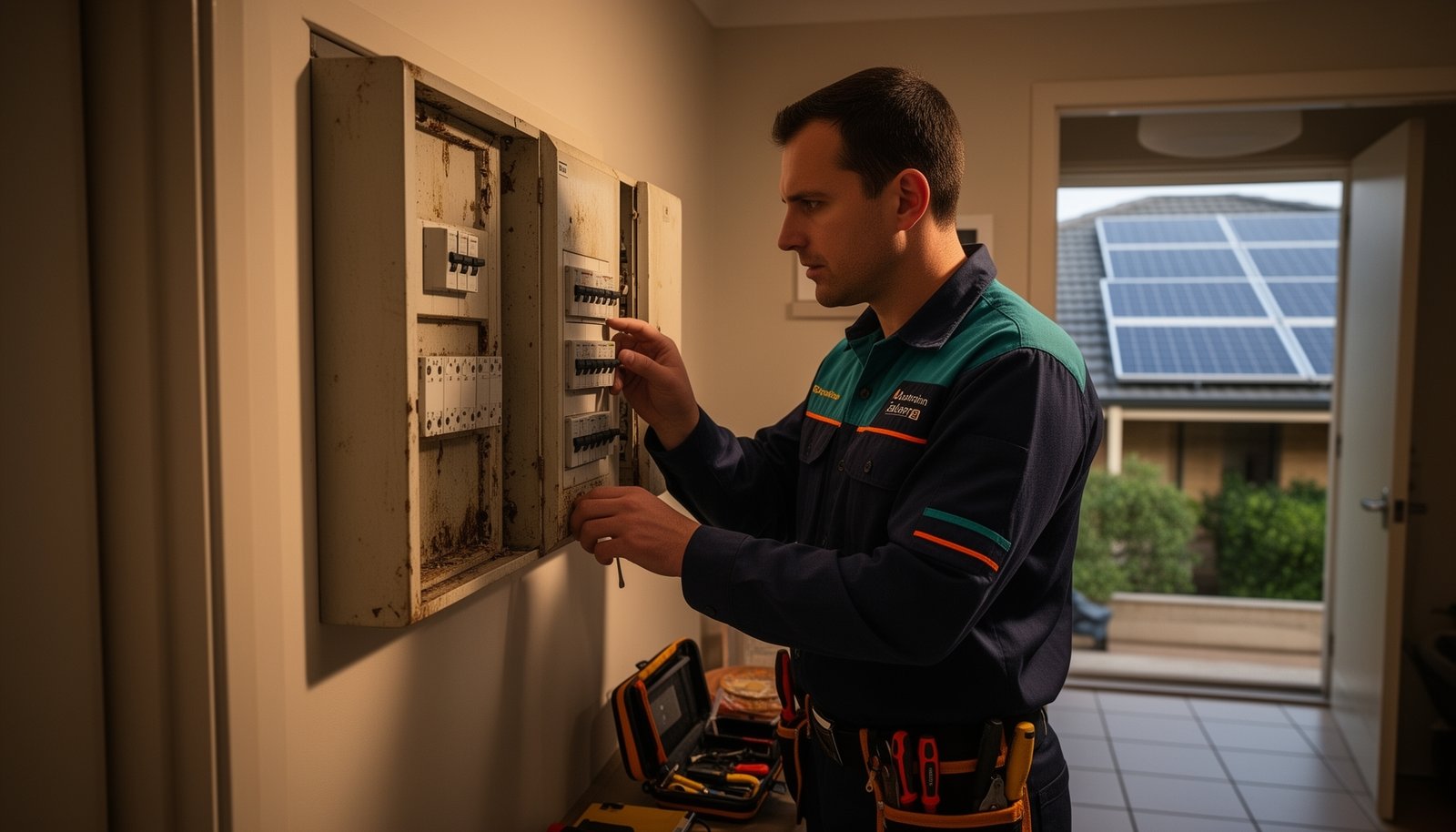
Visual signs like burn marks around the switchboard or the smell of burning are clear indicators that your electrical system is under duress. This could result from overheating due to overloaded circuits or faulty components. Such signs should prompt immediate action to prevent electrical fires, highlighting the urgency for a thorough switchboard inspection.
Non-Compliant With Current Standards
Regulations like the AS/NZS 3000 set out the standards for electrical installations in Australia. A switchboard that doesn’t comply with these regulations may not just be unsafe but can also void your home insurance policy. Regular inspections ensure that your home remains compliant and safe, safeguarding both your property and investment.
Frequently Asked Questions
Failing to inspect a switchboard can lead to electrical fires, increased risk of electric shock, and damage to electrical appliances.
It’s recommended to have a switchboard inspection every few years or when installing major new appliances or systems.
A switchboard inspection typically involves checking the condition of the wiring, the functionality of circuit breakers and safety switches, and ensuring compliance with current electrical standards.
Compliance ensures the safety and reliability of electrical systems, reducing risks of faults and ensuring insurance validity.
Yes, if a switchboard is non-compliant with current standards, it can void home insurance policies due to increased risk factors.