

Key Takeaways
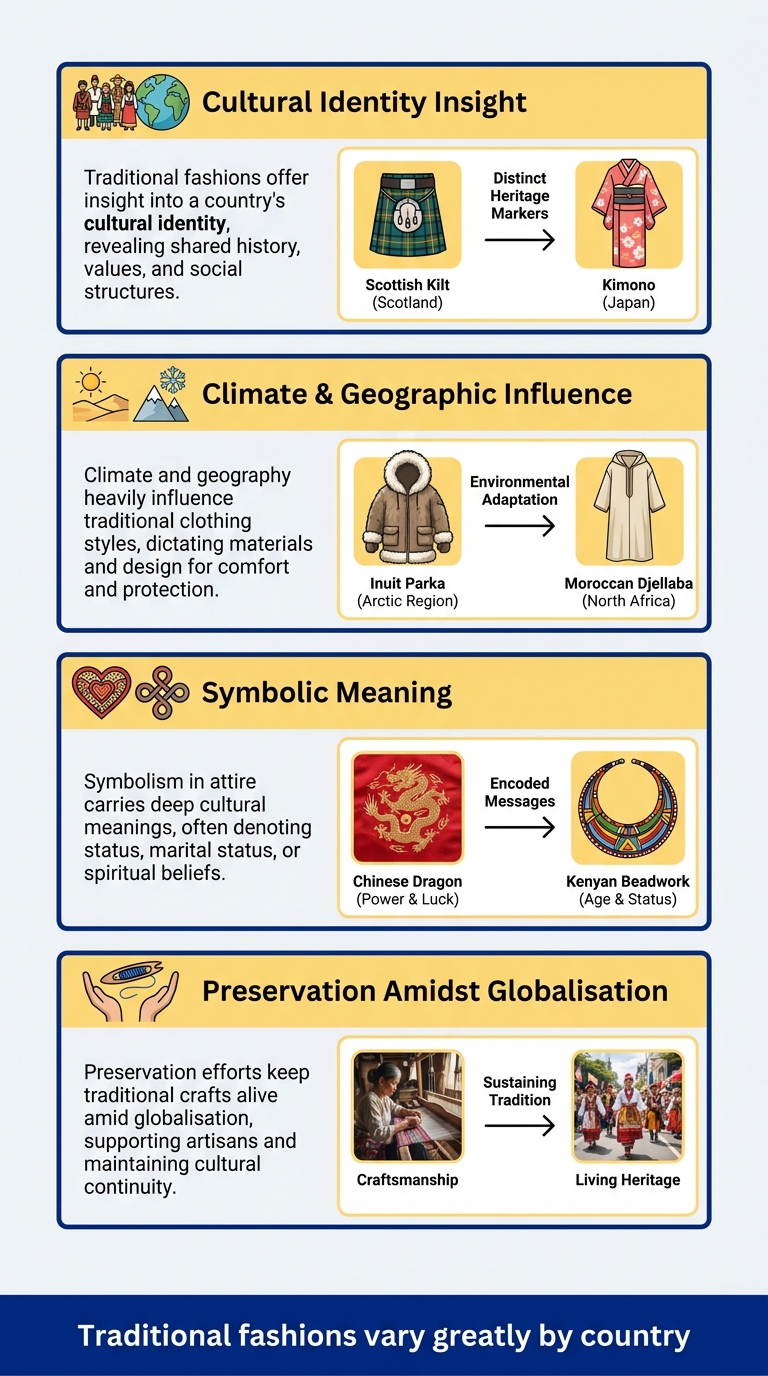
Traditional fashions offer insight into a country’s cultural identity.
Climate and geography heavily influence traditional clothing styles.
Symbolism in attire carries deep cultural meanings.
Preservation efforts keep traditional crafts alive amid globalisation.
Key Answer
Traditional fashions vary greatly by country, each telling a story of cultural identity through distinct clothing styles influenced by history, climate, and society.
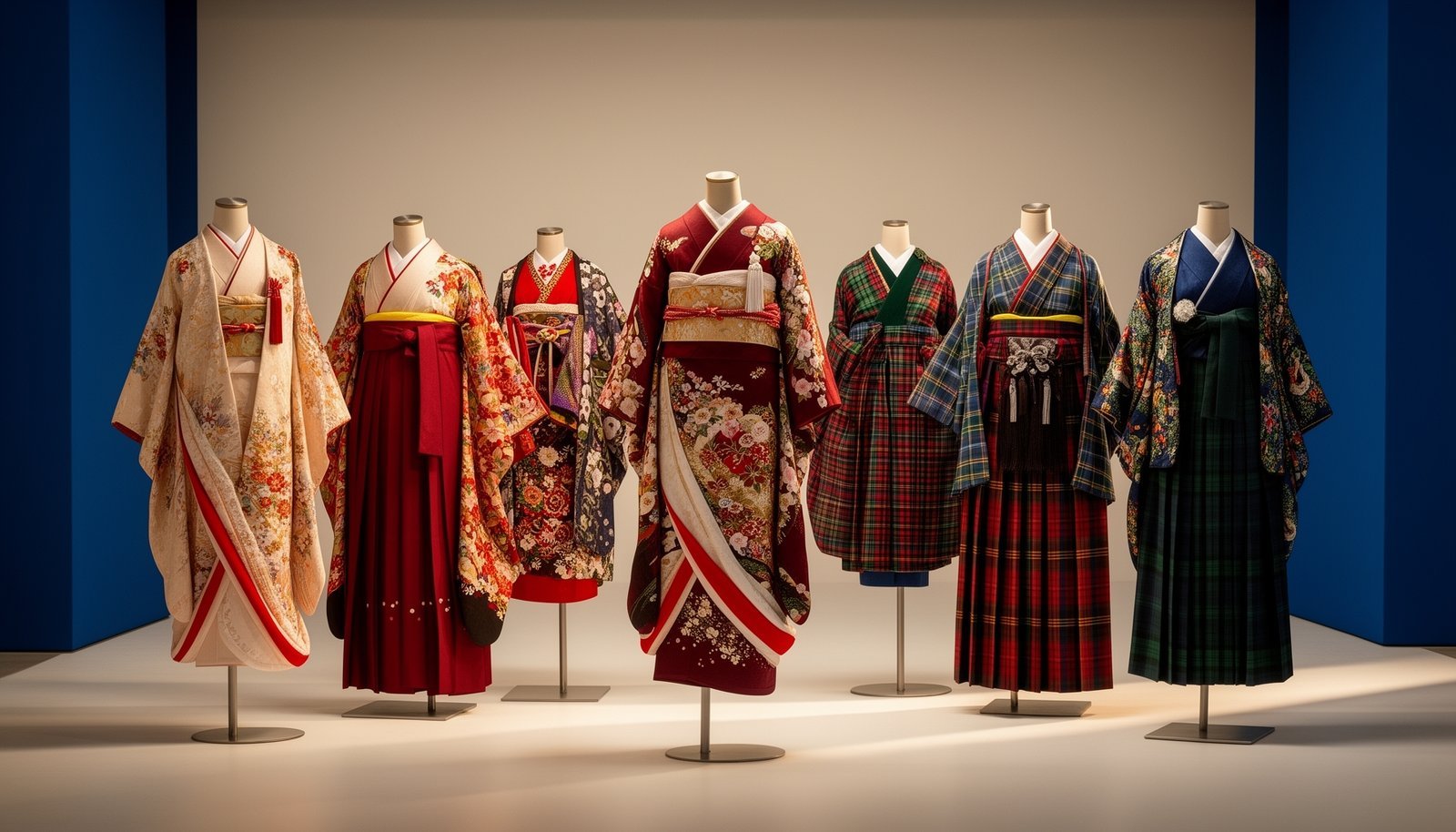
Traditional fashions vary greatly by country, reflecting the diverse cultural tapestries that define our global society. These unique clothing styles are not mere garments; they are visual narratives that tell stories of history, climate, religion, and societal values. From the vibrant sarees of India to the elegant kimonos of Japan, each country’s traditional dress is a testament to its cultural heritage.
The Cultural Significance of Traditional Dress
Clothing is a powerful expression of cultural identity, with traditional attire often symbolising the values and history of a people. These garments can mark social status, religious beliefs, or historical events. For example, the Maori in New Zealand wear intricate flax garments to celebrate their cultural roots and ceremonies.
Traditional clothing also serves practical purposes, tailored to the specific needs dictated by a country’s climate and geography. In the Arctic regions, Inuit people wear parkas made of animal skins to withstand extreme cold, while desert cultures often favour loose, flowing robes that provide ventilation and protection from the sun.
Regional Influences on Fashion
The fashion of any given region is influenced by a myriad of factors, including climate, available materials, and trade. For instance, Japan’s kimono, made from silk, reflects the country’s historical trade connections with China. Conversely, the South American poncho, crafted from wool, is designed to provide warmth in the Andes’ chilly climates.
Geography also plays a role in shaping traditional attire. Island nations, like Fiji, often incorporate local materials such as grass and leaves into their garments. Similarly, Alpine regions utilise wool to combat the harsh cold, underscoring how traditional fashions are a response to environmental conditions.
Region | Traditional Attire | Influence |
|---|---|---|
Japan | Kimono | Trade connections with China |
South America | Poncho | Andes’ climate |
Fiji | Grass skirts | Local materials |
Alpine Regions | Wool garments | Cold environment |
Expert Perspective
Cultural Historian
Traditional fashions, as cultural markers, provide unique insights into the values and histories of societies. They showcase how communities adapt to their environment and retain their cultural identity in a globalised world.
Symbolism in Traditional Clothing
Symbolism is deeply embedded in traditional attire, with colours, patterns, and designs often carrying significant meaning. In India, the colour red is associated with purity and is frequently seen in wedding saris. In Ghana, kente cloth is woven with symbolic patterns that represent proverbs and historical events.
These symbolic elements serve as visual languages, allowing garments to convey messages without words. For the Maasai of Kenya, the use of bright reds and blues in their shuka cloth not only represents beauty but also signifies bravery and strength. Such symbolism enhances the cultural value of traditional fashions, making them more than just clothing but also a form of storytelling.
Preservation of Cultural Heritage Through Clothing
Traditional clothing plays a crucial role in the preservation of cultural heritage. As modernisation and globalisation continue to influence cultures worldwide, traditional attire serves as a bridge connecting the past to the present. Wearing these garments during festivals and ceremonies helps keep traditions alive.
Moreover, many countries have initiatives to preserve traditional crafts and skills involved in making these garments. Japan’s efforts to maintain the art of kimono weaving or India’s promotion of handloom industries exemplify how traditional clothing is being sustained and promoted as cultural heritage.
Modern Influence and Adaptation
While traditional fashions remain rooted in cultural history, they are not immune to modern influences. Designers often reinterpret traditional garments, blending old with new to create fusion fashion that appeals to contemporary tastes. This trend can be seen in the global popularity of garments like the cheongsam, which has been modernised with various cuts and fabrics.
As traditional fashions evolve, they continue to reflect the dynamic nature of culture. This adaptation ensures that while people honour their past, they also embrace the present, allowing traditional attire to remain relevant in today’s world.
Frequently Asked Questions
Traditional fashions vary by country due to cultural, historical, and environmental factors that influence clothing styles, materials, and symbolism.
Climate affects traditional clothing by dictating the materials and styles suitable for local weather conditions, such as wool for cold climates or loose, breathable fabrics for hot regions.
Symbolism in traditional attire often conveys cultural meanings through colours, patterns, and designs, reflecting values, beliefs, and historical narratives.
Yes, traditional fashions remain relevant as they are adapted to contemporary styles and continue to play a role in cultural preservation and identity.
Examples include Japan’s kimono, India’s sari, Peru’s poncho, and Kenya’s Maasai shuka, each reflecting unique cultural and environmental influences.