
Understanding the Different Types of Submarines: A Comprehensive Guide
Key Answer
Explore the different types of submarines, including attack, ballistic, research, and rescue classes, while understanding their propulsion systems and strategic roles, particularly in the Australian context.
Key Takeaways
Submarines are critical to national defence strategies and marine exploration.
Australia’s use of diesel-electric submarines balances cost and stealth effectiveness.
Technological advancements, like AUVs, are expanding submarine capabilities.
The human element plays a crucial role in the operational effectiveness of submarines.
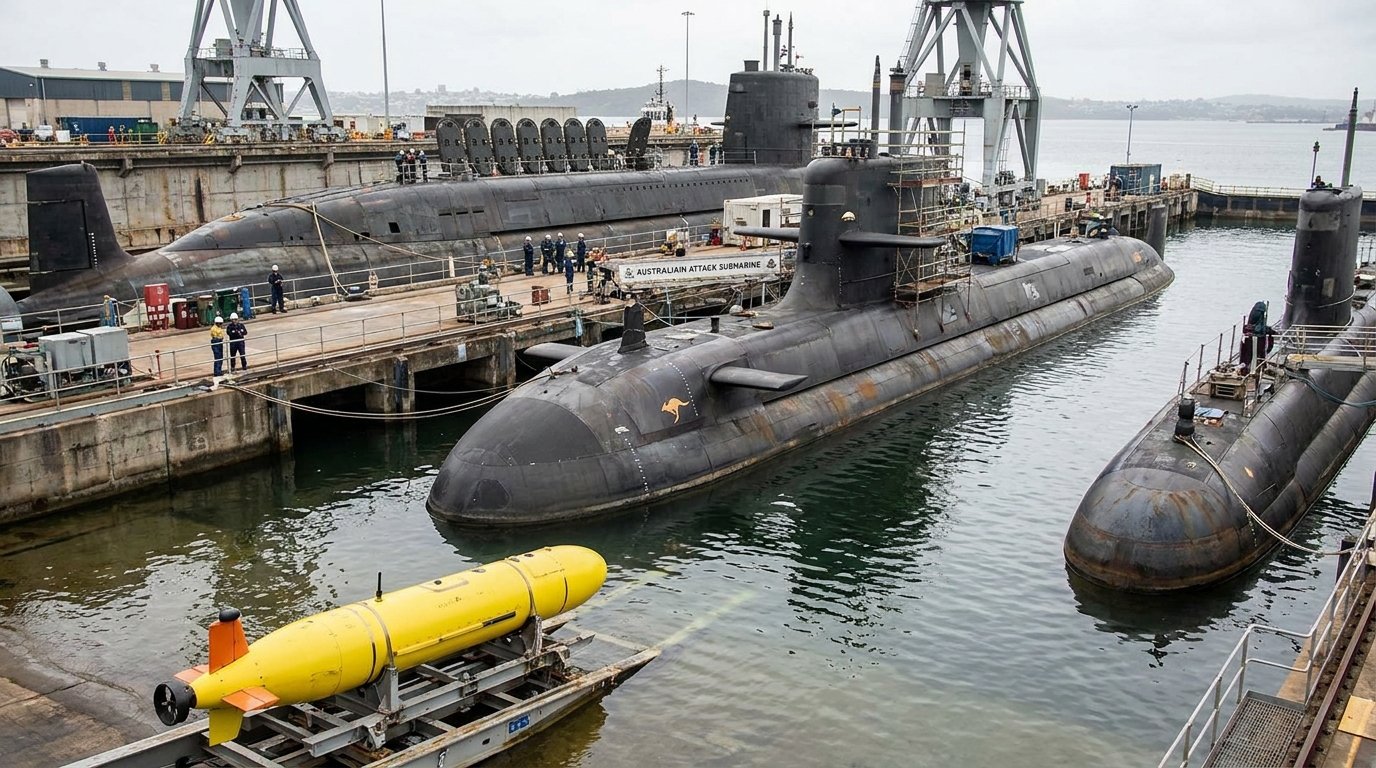
Grasping the strategic role submarines play in modern maritime defense is crucial. Australia’s Collins-class submarines, advanced autonomous underwater vehicles—these are just a glimpse into the varied and complex world of submarines. They are more than tools of war; they hold pivotal roles in marine research, participate in rescue missions, and are integral to national defense strategies.
Mission Profiles: Diverse Roles of Submarines
Submarines can be categorised by their mission profiles, each serving unique roles essential to a country’s maritime strategy. Attack submarines, for instance, are designed for stealth and are equipped to engage enemy vessels and protect naval assets. The Australian Navy’s Collins-class submarines are a prime example, renowned for their capability in anti-submarine warfare and intelligence gathering.
Ballistic missile submarines serve a different strategic purpose. These vessels act as deterrence platforms, capable of launching nuclear missiles from submerged positions. While Australia currently does not possess these, the global significance of such submarines cannot be overstated, as they provide a pivotal component of a nation’s nuclear triad.
Research and rescue submarines, on the other hand, are vital for non-combat missions. These include deep-sea exploration, underwater archaeology, and marine research. The adoption of advanced technologies in these submarines aids in studying marine life and geological structures, crucial for environmental science.
TypePrimary MissionExampleNotable FeaturesAttack SubmarineEngage enemy vesselsCollins-classStealth, anti-submarine warfareBallistic Missile SubmarineNuclear deterrenceVanguard-classNuclear missile capabilityResearch SubmarineMarine explorationDSV Limiting FactorDeep-sea capabilityRescue SubmarineCrew rescue operationsLR5Specialised rescue equipment
Propulsion Systems: Powering Undersea Operations
The propulsion system of a submarine plays a crucial role in its operational efficiency, impacting factors such as stealth, endurance, and cost. Diesel-electric submarines, like those in the Australian fleet, offer a balance between cost-effectiveness and stealth. These submarines can run quietly on battery power, reducing their acoustic signature and making them less detectable by enemy forces.
Air-independent propulsion (AIP) systems extend underwater endurance without needing to surface frequently, which enhances tactical capabilities. Although more expensive, AIP systems are preferred for missions requiring extended stealth operations.
Nuclear-powered submarines, though not part of the Australian Navy, are valued for their virtually unlimited range and endurance, operating for long durations without refuelling. This makes them ideal for extended missions, though they come with higher operational costs and maintenance demands.
Propulsion TypeAdvantagesDisadvantagesDiesel-ElectricCost-effective, quiet operationLimited underwater enduranceAIPExtended stealth operationsHigher costNuclearUnlimited range, long enduranceHigh cost, complex maintenance
AI
Expert Perspective
Marine Defence Specialist
In the evolving landscape of maritime defence, understanding the nuances of submarine capabilities is crucial. As countries like Australia invest in advanced technologies, the strategic importance of these underwater vessels continues to grow. The integration of autonomous systems signifies a shift towards greater operational efficiency and adaptability in naval operations.
Technological Advancements: The Rise of Autonomous Underwater Vehicles (AUVs)
Technological innovations are reshaping submarine capabilities. Autonomous Underwater Vehicles (AUVs) are leading this transformation by offering unmanned solutions for complex underwater tasks. These vehicles are used for a variety of missions, including reconnaissance, mine detection, and even data collection for environmental research.
The Australian Navy is investing in these technologies to enhance their maritime domain awareness and operational flexibility. AUVs can operate in environments too dangerous for manned submarines, providing invaluable data while minimising human risk.
Moreover, the development of Extra-Large Unmanned Underwater Vehicles (XLUUVs) is expected to further expand the strategic toolkit available to naval forces, allowing for greater autonomy in underwater operations and improved mission success rates.
Success Story
Enhancing Maritime Security with Submarine Technology
The Challenge
The Australian Navy faced challenges in effectively monitoring its extensive maritime borders.
The Result
By investing in advanced diesel-electric submarines and AUVs, the Australian Navy significantly enhanced its surveillance capabilities, leading to a more secure maritime environment.
The Human Element: Life on a Submarine
Life aboard a submarine is unlike any other naval experience. Crew members live in confined spaces and must be adaptable and resilient. One unique aspect is ‘Hot Racking’, where sailors share bunk beds in shifts due to space limitations. This practice demands a high degree of cooperation and camaraderie among crew members.
Psychologically, serving on a submarine requires strong mental fortitude due to prolonged periods away from family and limited communication with the outside world. The Australian Navy places a strong emphasis on selecting personnel who can thrive under these conditions, ensuring their crews are well-prepared for the challenges of submarine life.
Decommissioning and Environmental Impact
As with all naval assets, submarines reach the end of their operational lives and must be decommissioned. This process is complex, especially for nuclear submarines, where the handling of radioactive materials poses significant challenges. Although Australia does not operate nuclear submarines, the global trend towards sustainable disposal practices is becoming increasingly important.
Environmental considerations are paramount, with efforts to minimise ecological impacts and ensure safe disposal of materials. These efforts include recycling valuable components and safe containment of hazardous substances, a practice under constant scrutiny by environmental agencies worldwide.
Frequently Asked Questions
What are the main types of submarines?
The main types of submarines include attack submarines, ballistic missile submarines, research submarines, and rescue submarines.
Why does Australia use diesel-electric submarines?
Australia uses diesel-electric submarines because they are cost-effective and offer quiet operation, which is beneficial for stealth missions.
What is the role of autonomous underwater vehicles (AUVs)?
AUVs are used for reconnaissance, mine detection, and environmental data collection, offering unmanned solutions for complex tasks.
How does ‘Hot Racking’ work on submarines?
‘Hot Racking’ is a practice where sailors share bunk beds in shifts due to space constraints, requiring cooperation among crew members.
Why is the decommissioning of nuclear submarines challenging?
Decommissioning nuclear submarines is challenging due to the need for safe handling and disposal of radioactive materials.