
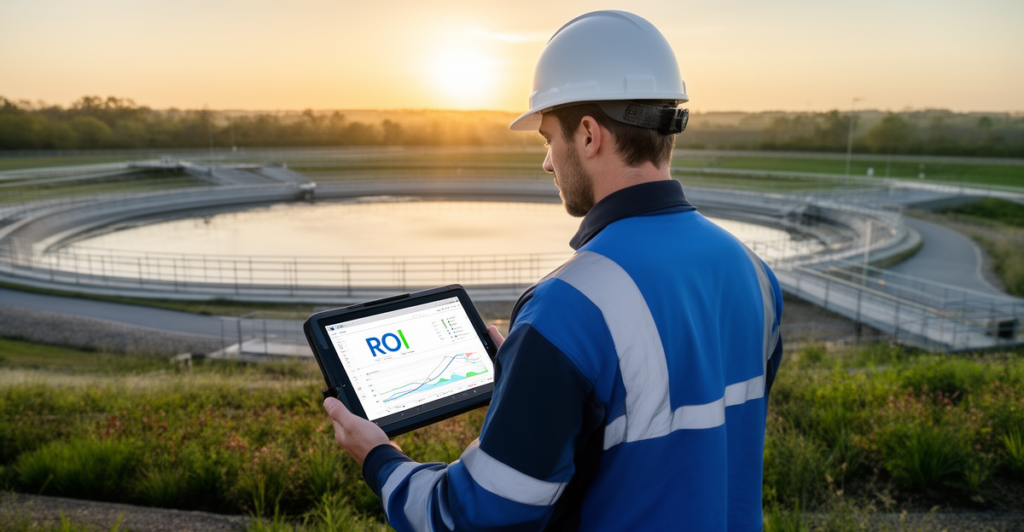
ROI is a term often tossed around in business meetings, reports, and planning sessions. But when it comes to maintenance, the meaning becomes more specific and practical.
Short for Return on Investment, ROI in the maintenance world is about understanding whether the time, effort, and money spent on upkeep are truly paying off. Rather than just focusing on immediate costs, it considers long-term benefits like asset performance, reduced downtime, and overall system efficiency.
This article breaks down what ROI means in a maintenance context, how it’s calculated, and why it’s essential for informed decision-making – especially if you’re dealing with systems like water ecosystems, ponds, or compliance-driven infrastructure.
Whether you’re maintaining a piece of equipment, a water treatment system, or even a facultative pond, understanding ROI helps balance cost against value.
Let’s dive into the key factors that define maintenance ROI and what they mean for optimized operations and smarter budgeting.
Understanding ROI in Maintenance
ROI, or Return on Investment, measures the value gained from maintenance activities relative to the money and time invested. In essence, it asks: ‘Is this maintenance worth it?’
In a maintenance conversation, ROI evaluates how actions like repairs, inspections, or system upgrades reduce costs over time, preserve asset life, or enhance efficiency.
It’s not just about fixing things when they’re broken. It’s about strategic planning that leads to long-term savings.
- Tracks cost savings from fewer breakdowns
- Highlights increased asset lifespan
- Supports better resource allocation strategies
- Validates the need for ongoing or preventative maintenance
How to Calculate Maintenance ROI
Calculating ROI in maintenance isn’t complicated, but it does require the right data. Typically, ROI is expressed as a percentage and calculated with this formula:
ROI = (Net Benefit of Maintenance / Cost of Maintenance) x 100
Here, net benefit might include savings from energy efficiency, reduction in unplanned downtime, or avoidance of equipment replacement. Cost includes labor, materials, and any contractor or equipment fees.
- Track maintenance costs separately from capital costs
- Include avoided failure costs in benefit calculations
- Consider long-term savings such as reduced uvc maintenance fees
- Account for improved efficiency in operations
Real-World Examples: ROI in Water and Pond Maintenance
In environmental or water infrastructure settings, like managing a facultative pond or a nutrient pool, ROI becomes particularly valuable.
For example, continual cleaning of a settling pond may seem expensive upfront, but it can prevent blockages that could require complete system rebuilds. That’s a high-ROI decision.
Similarly, ensuring a system is uvc compliant (meaning it meets ultra-violet light treatment standards) might involve higher short-term uvc maintenance fees but can reduce overall water treatment costs in the future.
- Pond aeration improves water quality and reduces algae buildup
- Regular dredging prevents overflow or habitat imbalance
- Maintaining optimal flow in a bassin (meaning reservoir or catchment area) reduces erosion risks
- UV-C system upkeep enhances long-term energy savings
Why ROI Isn’t Just About the Money
While cost is a major component, ROI in maintenance also ties into operational value and regulatory compliance. If a system isn’t permitted to operate due to failed maintenance, the loss goes beyond dollars – productivity and reputation are also affected.
In natural systems like facultative ponds or constructed wetlands, preserving the meaning ecosystem ensures biodiversity, water filtration, and downstream water quality. The ROI here includes environmental and social benefits.
- Supports environmental targets
- Meets regulatory standards (like uvc compliant meaning)
- Reduces long-term operational disruptions
- Protects community and stakeholder interests
Improving ROI Through Smart Maintenance Practices
The best way to improve your maintenance ROI is through proactive management. Predictive technologies, scheduled maintenance, and staff training all help stretch the value of every dollar spent.
Integrating smart monitoring can also prevent situations where equipment becomes fully submerged (meaning systems are overworked or poorly maintained), leading to expensive damage.
- Use sensors for early issue detection
- Schedule and document regular maintenance cycles
- Train staff for quick, effective response
- Review data regularly to spot trends or inefficiencies
Frequently Asked Questions
ROI stands for Return on Investment. In maintenance, it measures whether the cost of upkeep brings financial or operational benefits.
It’s calculated as ROI = (Net Benefit / Cost of Maintenance) x 100. You compare the savings or value gained against the money spent.
ROI helps justify maintenance spending and ensures resources are used effectively for long-term results.
Not always. Higher fees may improve system performance and reduce failures, increasing long-term ROI.
A facultative pond treats wastewater using natural processes. Proper maintenance ensures efficiency and environmental compliance, offering strong ROI.
A settling pond removes solids from water. Regular maintenance prevents clogs and system damage, providing long-term value.
If equipment becomes fully submerged due to poor maintenance, repair costs can skyrocket and hurt ROI.
Next Steps
undefined