
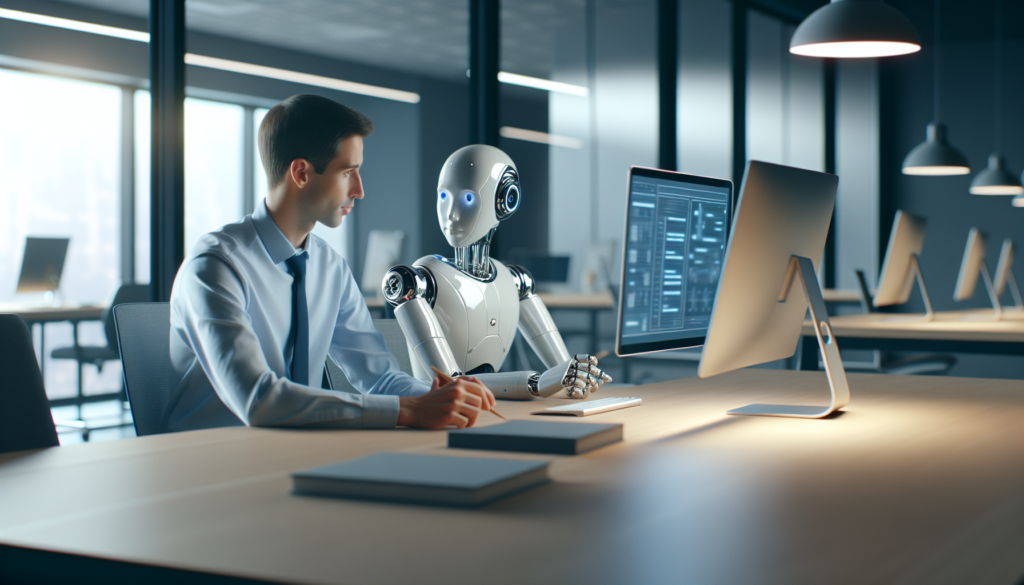
With the rapid advancement of artificial intelligence, one question continues to spark widespread curiosity and concern: will AI replace human workers?
From automated manufacturing lines to AI-generated content and customer service chatbots, examples of machines taking on tasks traditionally performed by people are becoming more common. But what does this trend truly mean for the future of employment—and humanity as a whole?
In this article, we’ll explore how AI is impacting the job market, whether machines can truly replace human abilities, and what steps individuals and industries can take to adapt.
Whether you’re a student, a seasoned professional, or simply curious about the evolving role of technology in society, this guide will help you understand the real implications of artificial intelligence in the workforce.
How Will AI Replace Human Jobs?
AI systems excel at tasks that involve speed, accuracy, and processing of large data sets. In fields like logistics, data analysis, and customer service, machines are already streamlining operations in ways that reduce the need for human input.
However, it’s not just repetitive or manual jobs that are experiencing disruption. Even complex roles like investment analysis or radiology are increasingly benefiting from AI-enabled tools.
- Customer service chatbots handling high volumes of inquiries
- AI algorithms analyzing large financial datasets in seconds
- Robots performing precise manufacturing tasks around the clock
Will AI Completely Replace the Human Workforce?
While automation poses a threat to certain job categories, it’s unlikely that AI will entirely replace the human workforce. Many tasks still require qualities that machines cannot replicate—such as emotional intelligence, ethical decision-making, and complex interpersonal communication.
In fact, many experts see AI as a tool to augment human capabilities rather than replace them entirely.
- Jobs requiring human empathy and judgment remain hard to automate
- AI often handles only specific parts of larger human-led roles
- Collaborative models between humans and AI are on the rise
Best AI Jobs vs Human Jobs: Where Do the Two Meet?
The emergence of AI has not only threatened some roles but also created entirely new job opportunities. Many ‘AI jobs’ that involve managing, developing, and interpreting AI systems are well-suited to human skillsets.
At the same time, traditional jobs that rely on empathy, creativity, and craftsmanship continue to hold value in the modern economy.
- AI-specialist roles include machine learning engineers, prompt designers, data scientists
- Human-led roles thriving today: therapists, writers, educators, craftsmen
- Hybrid roles: marketing professionals using AI tools to optimize campaigns
Can AI Replace Human Creativity?
AI can generate music, art, and even write articles—but most of its output relies heavily on learned patterns and existing content. Human creativity, by contrast, often comes from lived experiences, emotions, and cultural context.
So while AI may assist in creative workflows, it’s unlikely to fully replicate human imagination and originality.
- AI-created art lacks emotional nuance unless guided by humans
- Writers and designers can use AI to brainstorm but remain in control
- Innovation in storytelling still depends on human insight
How to Prepare for AI Replacing Human Jobs
The best way to stay relevant in an AI-enhanced world is to develop a mindset of adaptability and continuous learning. As routine tasks become automated, the demand for uniquely human skills is increasing.
Investing in education, digital literacy, and emotionally intelligent communication skills can help individuals remain competitive in the evolving job market.
- Focus on upskilling in digital and AI-related tools
- Strengthen critical thinking and emotional intelligence
- Explore careers that merge technology with human judgment
What Is the Future of AI Replacing Humans?
As AI becomes more integrated into society, the focus is shifting from displacement to collaboration. Future workplaces are likely to combine human input and machine efficiency, enhancing productivity without eliminating the need for human workers.
Policymakers and industry leaders are also recognizing the need to balance innovation with workforce development and ethical concerns.
- Rise in human-AI collaboration across industries
- Policies to support workforce retraining and transition
- Long-term shift towards hybrid roles blending both capabilities
Frequently Asked Questions
No, while AI may automate specific tasks, it is unlikely to replace humans entirely, especially in jobs requiring empathy, context, or creativity.
Roles involving repetitive, rule-based tasks are the most vulnerable. These include data entry, basic customer support, and some manufacturing jobs.
Jobs in machine learning, AI development, data science, and AI ethics are growing quickly and require human expertise.
AI can mimic creative tasks but lacks genuine emotional depth and lived experience, so it cannot fully replace human creativity.
By learning new technologies, focusing on soft skills, and exploring roles where human input is irreplaceable.
Industries heavily reliant on human connection, like healthcare, education, and arts, are less likely to be fully automated.