
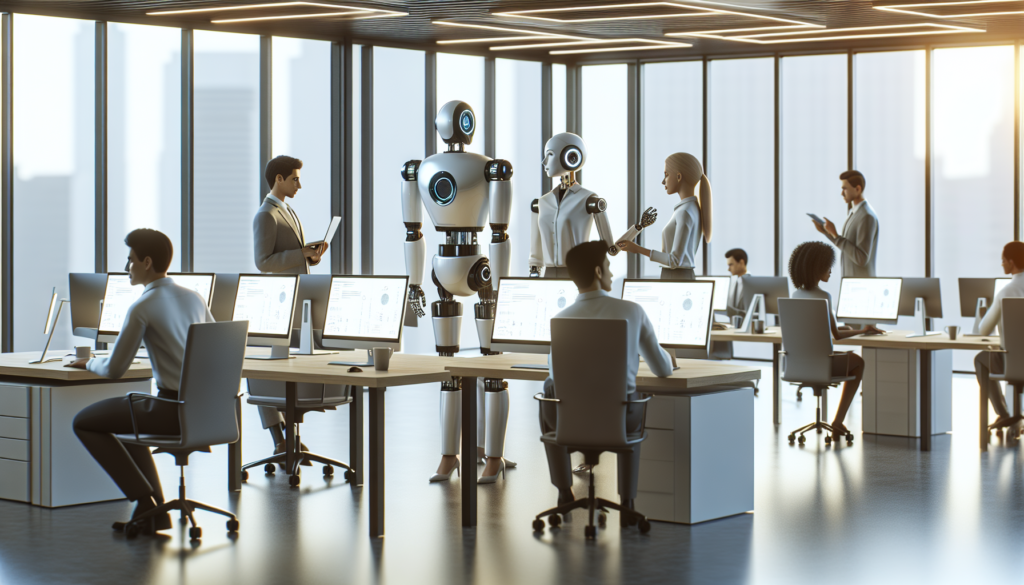
The rise of artificial intelligence (AI) has sparked an ongoing debate: will AI replace humans in the workforce? With advanced algorithms, machine learning, and automation transforming industries, the question is timely and critical.
There’s no denying that AI is already changing how we work. Self-checkout machines, chatbots, personalized recommendations, and smart diagnostics are all examples of how technology replaces or assists human labor.
But can AI truly replace human capabilities altogether — or will it serve as a collaborator? The answer isn’t a simple yes or no. Instead, this article breaks it down along those lines for better analysis.
We’ll explore the real impact of AI on employment, which jobs are at the highest risk, and what you can do to prepare for a future where humans and AI increasingly work side by side.
Let’s unpack whether AI will replace human roles — sorting the facts into clear Yes and No categories.
Yes: AI Will Replace Some Human Jobs
AI has already demonstrated its ability to outperform humans in repetitive, rules-based tasks across multiple industries. In sectors like manufacturing, logistics, finance, and customer service, many roles are being automated to improve efficiency and reduce costs.
Jobs that don’t require emotional intelligence, creativity, or nuanced decision-making are especially vulnerable. Companies use AI to perform the same work faster, 24/7, and without human error.
- Data entry and back-office processing
- Basic customer service (via chatbots)
- Warehouse sorting and packaging
- Invoice processing in finance departments
- Quality control in manufacturing
No: AI Cannot Fully Replace Humans
Despite its strengths, AI lacks uniquely human capabilities such as empathy, ethics, creativity, and complex problem-solving that require context.
Roles that involve emotional intelligence, critical thinking, and interpersonal interaction are challenging for AI to replicate. These make up a vast portion of jobs across education, healthcare, strategy, and leadership.
- Healthcare roles requiring human bedside care
- Teachers and educational counselors
- Leaders and managers who inspire teams
- Creative professionals (writers, designers, marketers)
- Social work and mental health careers
Yes: AI Will Transform Industries Through Automation
Industries such as automotive manufacturing, retail, and even agriculture are undergoing massive change because of AI. Automation isn’t limited to robots — it includes algorithms that forecast demand or scan legal contracts as well.
This transformation means fewer roles requiring manual intervention, and more demand for people who can build, maintain, and supervise AI systems.
- Fewer routine roles, more tech-enabled ones
- Need for retraining in digital tools
- Rise in cross-functional hybrid roles
- Fast-paced change across industries
No: AI Will Create New Job Opportunities
History shows that technological revolutions often lead to new types of jobs. AI is likely to follow that pattern. Just as the internet created countless roles that didn’t exist before, AI will open demand for new skills and disciplines.
AI specialists, data scientists, ethical AI reviewers, and prompt engineers are all emerging careers that highlight the human role in shaping the future of technology.
- Growth in AI development and oversight roles
- Jobs in AI training and system supervision
- Ethical regulation and AI governance positions
- Human-in-the-loop system designing and testing
How to Prepare for AI in the Workforce
Rather than fear AI, the best approach is to adapt. The future belongs to those who can work with AI and leverage its power, rather than be replaced by it completely.
Upskilling, lifelong learning, and focusing on human-centered capabilities like emotional intelligence, adaptability, and creativity are key strategies for staying relevant.
- Learn how to use AI tools relevant to your industry
- Invest in digital literacy and data skills
- Develop transferable soft skills like communication and leadership
- Attend training, certifications, and workshops regularly
- Follow changing industry trends to spot emerging opportunities
Frequently Asked Questions
No, AI will replace some roles, especially repetitive ones, but many jobs need human skills AI cannot replicate.
Jobs involving routine, predictable tasks such as data entry, call centers, and basic bookkeeping are most at risk.
No, AI can simulate some cognitive functions but lacks emotional understanding, ethics, and true creativity.
AI is automating certain tasks, creating new tech-focused roles, and increasing demand for adaptable, tech-savvy workers.
By learning how to work with AI, developing soft skills, and staying educated about industry changes.
The likely future is collaboration, where humans use AI tools to enhance productivity rather than compete with them.
Yes, roles like AI ethics officers, data scientists, and machine learning engineers are in high demand.